
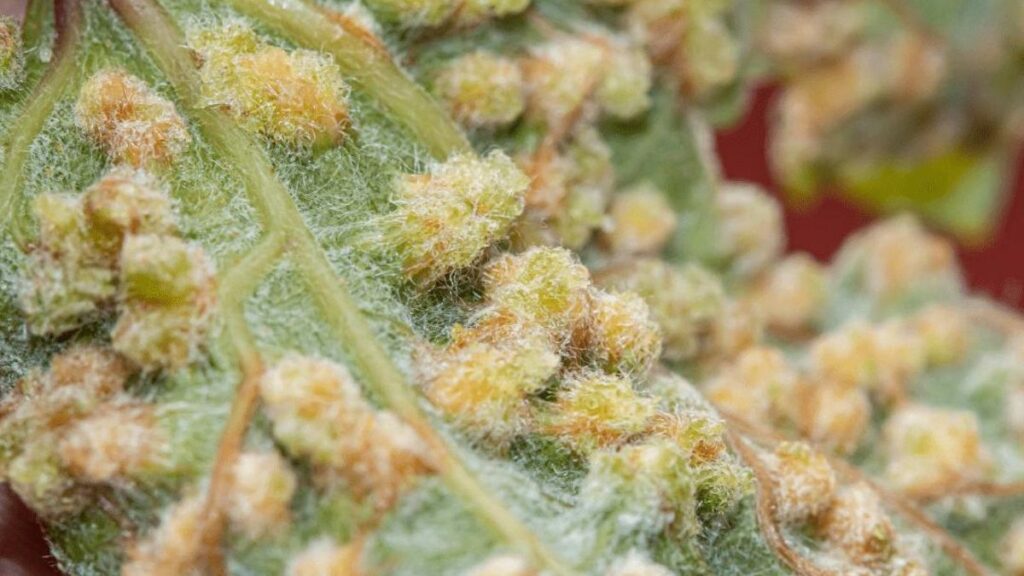
Phylloxera confirmed in Tenerife’s vineyard soil
Canary Islands authorities have received the worst news to date regarding the phylloxera outbreak detected in Tenerife since last July. Official sources have confirmed that the pest, for which there was no previous official record in the archipelago, is now present in the island’s vineyard soil. This represents a significant and grave advancement of the contagion, complicating the management of this phytosanitary crisis. The confirmation came during the latest technical monitoring meeting on the phylloxera situation, which, as of today, remains confined to Tenerife.
Laboratory analysis reveals underground infection
According to information from the meeting, which was communicated to many Tenerife winegrowers this morning via their Protected Designations of Origin (DOP), 60 out of 159 soil samples taken were sent to the national reference laboratory in Lugo. The lab has reported three positive results for phylloxera in the soil. Following these findings, the regional Ministry intends to collect new samples for repeat analysis. The current balance of controls, focused on Tenerife where the problem is active, shows 7,769 inspections across the Canaries, with 89 positive cases on leaves. In contrast, the 159 soil samples have yielded three positives from the 60 analysed so far.
Outbreak spread across the island
As of this Friday morning, 89 infection foci have been located on vine leaves in Tenerife. The majority are on the island’s north side—in La Laguna (Valle de Guerra, the ‘ground zero’ area), Tacoronte, Tegueste, La Matanza and La Orotava. Some outbreaks have also been detected in the south, in the Valle de Güímar within the municipality of Candelaria.
A severe blow for Tenerife’s unique wine industry
The confirmation that the phylloxera infection exists in the subsoil—and is therefore no longer just aerial (on leaves or branches)—is a severe blow for controlling this serious phytosanitary problem in Tenerife’s vineyards. Tenerife is the largest producer of quality wine grapes in the Canaries, with five Protected Designations of Origin and the largest presence of the overarching ‘Islas Canarias’ DOP. The pest’s presence underground makes treatment extremely difficult, reduces the capacity to control its spread, and almost always forces the removal of affected vines. This means starting anew, making a substantial investment (around €30,000 per hectare, according to the Avibo association), and doing so with rootstocks resistant to the plague—so-called American rootstock—grafted with certified local plant material.
The challenge of preserving pre-phylloxera vines
This necessary transformation would mean abandoning the international singularity of pre-phylloxera cultivation, one of the commercial hallmarks and strengths of Canary Islands quality wines. The work to define resistant rootstocks and simultaneously certify the islands’ own vine varieties—a task that is crucial for successful grafting and is surprisingly incomplete—is already underway by entities like the ‘Islas Canarias’ DOP and the local winegrowers’ association Avibo. These actions are expected to form part of a strategic plan for the islands’ vineyards, based on the final contributions of a recently established scientific committee on phylloxera.
Scientific committee to guide response
The committee’s role is to provide scientific and technical rigour, and a unified vision involving all stakeholders and islands, on aspects that help clarify how and when phylloxera could have arrived in the Canaries and how to address the problem. It must also examine the fact that over 90% of confirmed positives have been found in abandoned plots. Furthermore, the committee will have to analyse whether the biotype of the aphid—the insect vector of phylloxera—is the same as the plague from 150 years ago (which did not affect the islands) or if it has mutated. The detection of the first case in the subsoil of a plot in La Laguna’s Valle de Guerra, the ground zero zone, confirms the pest is now attacking plant roots, a new and critical phase in the outbreak.
No post found!