
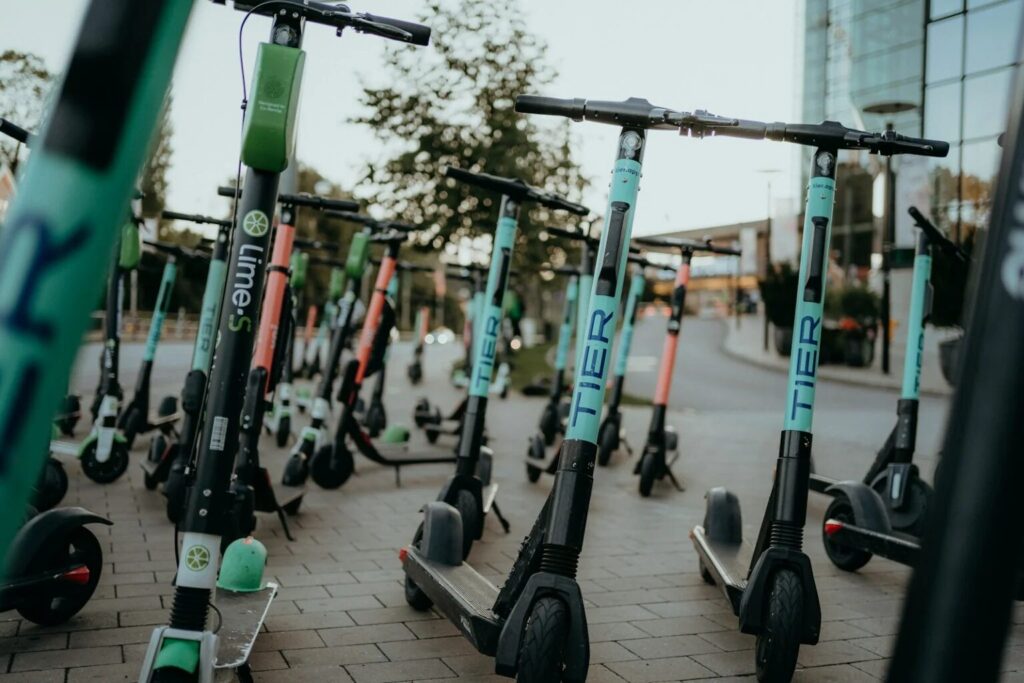
From 2 January 2026, new nationwide regulations covering electric scooters and certain e-bikes will come into force across Spain, including the Canary Islands. Owners of these vehicles will need to take out third-party liability insurance and register their vehicles in a national registry.
- E-bikes with Pedal Assistance
- Insurance Requirements and Penalty Amounts
- Transition Period and Insurance Costs
- National Registry and New Technical Requirements
- Rental vs Private E-Scooters
- Local Municipal Regulations in the Canary Islands
- Santa Cruz de Tenerife – The Strictest Local Rules
- Adeje and Arona – Tourist Municipalities in Southern Tenerife
- Coordination Challenges Between Municipalities
- Las Palmas de Gran Canaria – Public E-Scooter System
- Other Municipalities in Tenerife
- Issues with Modified E-Scooters
- Accident Statistics and Justification for Changes
- Impact on Mobility Scooters for Disabled People
- Looking Ahead
- Additional Improvements for Accident Victims
- Summary of Key Information
The reform of the motor insurance law, approved by the Spanish Congress, aims to align Spanish regulations with EU Directive 2021/2118. The new rules cover personal mobility vehicles (PMVs), which include electric scooters and certain e-bikes.
Insurance will become mandatory for vehicles meeting the following criteria: the vehicle reaches a maximum speed exceeding 25 km/h, weighs over 25 kg with a maximum speed exceeding 14 km/h, or is an electrically assisted bicycle capable of exceeding 45 km/h.
E-bikes with Pedal Assistance
Most standard pedal-assist e-bikes (pedelecs) will remain exempt from the insurance requirement. This applies to bikes meeting EU standards: a motor with a maximum output of 250 watts, pedal assistance only up to 25 km/h, and no possibility of riding without pedalling (no throttle function).
However, owners of such bikes are advised to take out voluntary insurance for additional protection. All e-bikes exceeding these parameters will be subject to mandatory insurance and registration, similar to mopeds.
Insurance Requirements and Penalty Amounts
Minimum insurance requirements have been set at €6.45 million for personal injury and €1.3 million for property damage. These amounts will be updated annually in line with the Consumer Price Index (CPI).
Vehicle owners have until 25 January 2026 to purchase the required insurance and register their vehicle. No penalties will be imposed before this date, but after this deadline, riding without insurance could result in fines of up to €1,000.
Transition Period and Insurance Costs
The government has introduced a six-month transition period during which owners won’t be penalised for lack of insurance. However, it’s important to note that if an accident occurs during this period, the Insurance Compensation Consortium will cover damages and then seek reimbursement from the responsible rider.
Industry experts estimate that the cost of basic third-party liability insurance for an e-scooter will be relatively affordable, typically ranging from €30 to €50 annually. The premium may vary depending on the chosen level of cover, the e-scooter’s weight and its maximum speed.
National Registry and New Technical Requirements
The Spanish government is to implement a national registry of personal mobility vehicles by 2 January 2026. This registry will facilitate vehicle and owner identification in the event of an accident and promote safer, more organised urban mobility.
Vehicles must have a visible identification plate, a circulation certificate accessible via QR code, and a valid technical inspection (ITV). If the ITV is pending or has expired, only temporary insurance is available, restricting normal use.
Rental vs Private E-Scooters
If you’re using the lightweight rental e-scooters you see parked on street corners, you can relax – rental companies already have their own insurance policies in place. However, if you own your own e-scooter or e-bike, the details matter and you’ll need to arrange your own insurance.
Local Municipal Regulations in the Canary Islands
In addition to nationwide insurance and registration requirements, individual municipalities in the Canary Islands are introducing their own additional local regulations governing e-scooter use. These rules vary between municipalities and mainly concern helmet requirements, parking locations and riding zones.
Santa Cruz de Tenerife – The Strictest Local Rules
Tenerife’s capital, Santa Cruz, has introduced some of the most restrictive local regulations on the island. The new municipal mobility and road safety ordinance imposes a series of obligations on e-scooter users.
Mandatory helmet wearing for all users, minimum age of 16 (15 only in enclosed areas under supervision), complete ban on riding on pavements and pedestrian zones, prohibition on crossing pedestrian crossings (riders must dismount and walk), and voluntary registration for private e-scooters but mandatory for rental companies.
Hefty fines for non-compliance with local rules in Santa Cruz range from €1,500 to €3,000 for serious violations, up to €750 for minor offences, and €200 for parking in prohibited areas or riding in pedestrian zones.
Santa Cruz has also limited the number of e-scooter rental companies to two operators with a maximum of 1,292 e-scooters across the city. Each company must pay a fee of €20,000 plus a deposit of €50 per e-scooter.
Adeje and Arona – Tourist Municipalities in Southern Tenerife
The municipality of Adeje in southern Tenerife, covering popular tourist resorts, is introducing its own additional regulations governing e-scooter use. Mercedes Vargas Delgado, deputy mayor and councillor for safety and mobility in Adeje, is leading efforts to formalise the new rules.
Key measures outlined in the forthcoming ordinance include mandatory helmet use for riders and increased fees for removing and collecting e-scooters from municipal pounds. These steps are part of the town hall’s Sustainable Urban Mobility Plan (PMUS), aimed at tackling the chaos caused by unregulated e-scooter use and parking.
The municipality is also promoting educational campaigns in local schools to raise young people’s awareness of the importance of complying with the new safety regulations. Vargas announced that higher fees will be introduced for abandoned e-scooters left on public roads and impounded by local authorities.
The neighbouring municipality of Arona is also developing similar rules. According to the 2008 municipal traffic ordinance, e-scooters are banned on pavements and roads except in areas specifically designated for them. Police carry out systematic checks and have recently confiscated 30 e-scooters.
Coordination Challenges Between Municipalities
Vargas acknowledged the difficulty in coordinating regulations between neighbouring areas, particularly as there are no clear geographical boundaries separating some regions. The proximity between Adeje and Arona in Playa Las Americas complicates enforcement, as companies with contracts in one area may not be subject to penalties in the other.
In practice, this means e-scooter users may encounter different local regulations within a relatively small area. For example, helmet wearing may be required in one municipality but not in the neighbouring one, leading to confusion among residents and tourists alike.
Las Palmas de Gran Canaria – Public E-Scooter System
The capital of Gran Canaria has introduced its own public e-scooter rental system called “Sítyneta”, which launched as a pilot project. The system has 13 stations located mainly in the upper part of the city and offers a total of 87 e-scooters available to residents.
In Las Palmas, local safety regulations apply: ban on riding under the influence of alcohol (fines up to €1,000), ban on carrying passengers, riding only on cycle paths and 30 km/h zones, and prohibition on wearing headphones whilst riding.
Although helmets aren’t mandatory for adults over 18, they are strongly recommended. People under 16 cannot use e-scooters. The city manages the rental system centrally, ensuring better control over the number of vehicles and their location.
Other Municipalities in Tenerife
Other municipalities in Tenerife are at various stages of implementing local regulations. Granadilla de Abona is awaiting final approval of its Sustainable Urban Mobility Plan, on the basis of which a local ordinance regulating e-scooters will be developed.
In La Orotava, e-scooters are practically invisible due to the mountainous terrain, making them impractical as a means of transport. In Puerto de la Cruz, local authorities claim there have been no conflicts or incidents involving e-scooters, and that e-scooters operate in accordance with DGT regulations.
Issues with Modified E-Scooters
Despite speed limits in force across Spain, police in the Canary Islands frequently find e-scooters that have been modified to travel much faster, sometimes reaching speeds of 60 km/h or more. It’s also common to see more than one person sharing an e-scooter, particularly in tourist areas, which is both illegal and dangerous.
Under nationwide regulations, e-scooters must weigh under 25 kilograms and have a maximum speed of between 6 and 25 km/h. If an e-scooter is heavier, its speed must be limited to 14 km/h. Only one person is allowed on each e-scooter.
Accident Statistics and Justification for Changes
In 2023, there were 300 accidents involving e-scooters in Spain, resulting in 187 injuries and 12 deaths, according to a study by Fundación Mapfre. The Spanish Federation of Personal Mobility Vehicles (Fevemp) estimates there are over 5 million e-scooters in the country.
Until now, many accident victims involving e-scooters have had difficulty obtaining compensation, particularly when the rider claimed they were unable to pay. The reform aims to address this issue and provide greater safety for all road users across Spain, including the Canary Islands.
Impact on Mobility Scooters for Disabled People
An important issue raised by users is the status of mobility scooters for disabled people. There are no plans to require mobility scooter users to have insurance, although it is recommended. We’re talking here about personal mobility vehicles such as e-scooters, not those used by people with limited mobility.
Disabled users can continue to use their vehicles, and holding a blue parking badge should be sufficient to identify a legitimate user throughout Europe. The regulations are aimed at able-bodied people using e-scooters for recreational or transport purposes.
Looking Ahead
The reform comes in response to the rapid growth in the use of these vehicles, whose regulations were previously inconsistent and fragmented. Spain joins other European countries such as France and Germany, where similar regulations are already in force, transforming e-scooters from unregulated vehicles into ones with clear obligations.
Madrid has already cancelled licences for e-scooter rental companies, and by 2027, only certified and approved models will be allowed on Spanish roads. This will also affect residents and visitors to the Canary Islands, where e-scooters have become a common sight in tourist areas.
Additional Improvements for Accident Victims
The reform also introduces improvements in the payment of compensation to accident victims across Spain. Police reports will be easier to obtain, medical examinations will be carried out more quickly, and mediation will help avoid lengthy and costly court proceedings.
Compensation will be updated in line with inflation and extended to carers and close family members. If an insurance company becomes insolvent or if an accident involves an uninsured vehicle, the Insurance Compensation Consortium will take responsibility for paying victims.
Summary of Key Information
The new nationwide regulations aim to bring order to the rapidly developing world of urban mobility across Spain. Whilst they introduce new costs and formalities for owners of e-scooters and certain e-bikes, they also aim to provide greater safety for all road users and guarantee compensation for accident victims.
Vehicle owners should begin the insurance and registration process now to avoid penalties after 25 January 2026. The cost of insurance is relatively low compared to the potential consequences of riding without a policy, and the process of taking out insurance is simple and quick.
Additionally, remember that in addition to nationwide requirements, you must also comply with local municipal regulations, which can vary significantly between different localities in the Canary Islands. Before travelling to a specific municipality, it’s worth checking the local regulations in force there regarding helmets, parking locations and zones where you can ride an e-scooter.