A New Era for Emergency Care in Tenerife
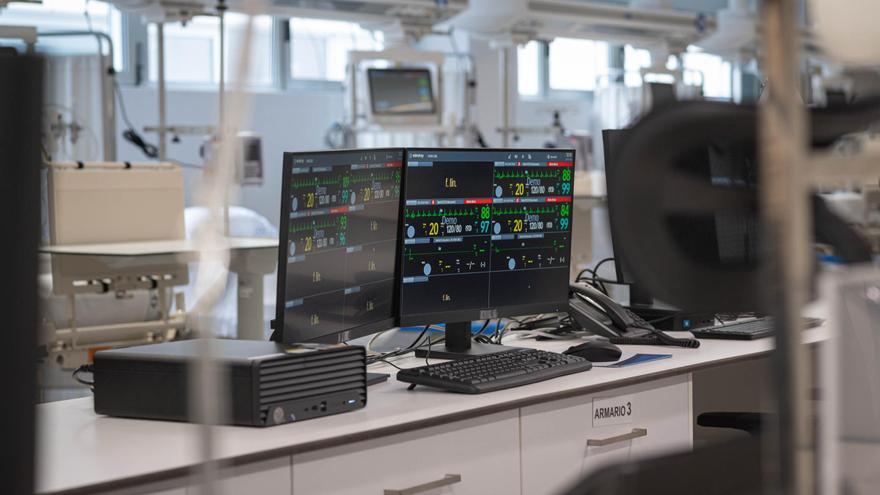
The new emergency department at the Nuestra Señora de Candelaria University Hospital opens with an ambitious goal: to banish healthcare delivered in hallways. This new infrastructure has been specifically designed to prevent this phenomenon, which had become a symbol of the struggle against the precarious state of healthcare services. With an open-plan design, narrow corridors, and dozens of rooms prepared for patient care, this project—one of the most monumental in Canarian healthcare—will come to life this Wednesday at 7:00 AM.
From Parking Lot to State-of-the-Art Facility
On the very spot where, just seven years ago, dozens of cars were piled up searching for parking, now stands a two-story grey building spanning more than 2,000 square meters. It welcomes patients with a large sign that reads: Emergency Department. The building, which represents a €9.6 million investment, is just steps from the main road, allowing for quicker access for both ambulances and pedestrians. It also features a spacious patient unloading zone to prevent ambulances from getting clogged at the entrance, an issue that has hampered medical assistance on numerous occasions.
A Phased Opening for Maximum Efficiency
In this first phase, however, only 1,000 square meters—the entire first floor—will be utilized. “We expect to have the upstairs floor ready in about six months,” announced the Minister of Health, Esther Monzón. During an institutional visit to the new facilities, she explained that the upper area has not yet opened because it “lacks the connection to the old building.”
Designed for Better Patient Supervision
This new facility addresses one of the most pressing needs for healthcare workers: the ability to monitor patients at all times. The previous building, which had grown piecemeal over time, had a sometimes chaotic and overly labyrinthine layout that made it impossible to keep an eye on several patients simultaneously. This new, much more open space, where all rooms connect to one another and most waiting and treatment areas are equipped with large windows, will allow professionals to be more aware of everything happening within the emergency department.
Expanding Capacity for a Growing Demand
As explained by the Head of Emergency Services and Deputy Medical Director of the Hospital de La Candelaria, Ignacio Ayala, this expansion will add 45 new beds to the service. “In total, the number of patients we can accommodate between this new building and the old one will be about 168 on stretchers,” Ayala noted, adding that many others—those who are able to walk—will receive care in chairs. Both buildings will operate side-by-side in the coming months, especially with the anticipated increase in demand due to the flu season. “The old building will continue to maintain the observation zone, but it is also part of our contingency plan,” the doctor revealed.
It is worth remembering that the Nuestra Señora de Candelaria University Hospital receives an average of 317 emergency patients daily. In 2024 alone, this service attended to 114,338 people, of whom 16,583 required subsequent hospitalization.
Putting an End to Hallway Medicine
The purpose is not only to improve assistance but also to put an end to the image of hallways filled with beds. “The hallway represented our inability, from a structural and material standpoint, to provide a response that placed the patient at the center of the system,” admitted the President of the Regional Government, Fernando Clavijo. He insisted that this type of expansion will also enable workers to perform their duties under better conditions.
Specialized Care Zones and Increased Staff
The new building is divided into different rooms to provide specific care depending on the patient’s condition. For instance, there is a dedicated space for critical patients located near the entrance, another room prepared for patients with mental health issues, several for trauma patients (such as those with falls or bone fractures), as well as two isolation cubicles for patients arriving with contagious diseases. The space also includes monitoring rooms, consultation areas, and several waiting areas, all situated close to the patient. This investment has also allowed for an increase in emergency staff by 30 people, which, as Monzón announced, now totals 400 personnel.
A Project Delayed but Finally Delivered
Regarding the long time it took for this project to become operational, the hospital manager, Óscar Díez, recalled that it was first “slowed down by COVID.” The construction began on December 10, 2019, under the then Minister of Health, Teresa Cruz Oval. Subsequently, as Díez explained, there were “different modifications to the project requested by the various management teams themselves,” which also delayed the process.
Part of a Broader Canary Islands Health Upgrade
“We have achieved one of our objectives, which is to improve emergency care in the hospitals of the Canary Islands,” emphasized Monzón, who took the opportunity to note that both the Hospital Insular Materno-Infantil of Gran Canaria (Chuimi) and the University Hospital of the Canary Islands (HUC) are currently receiving upgrade improvements. “We still have to improve these two,” Monzón insisted, explaining that work has already begun at the HUC to improve patient care circuits. Furthermore, she revealed that a land swap with the University of La Laguna (ULL), which will cede the nursing school facilities to the Canary Islands Health Service, will allow for a further expansion of these emergency services in the future.