
Guardianship Dispute Creates New Tension
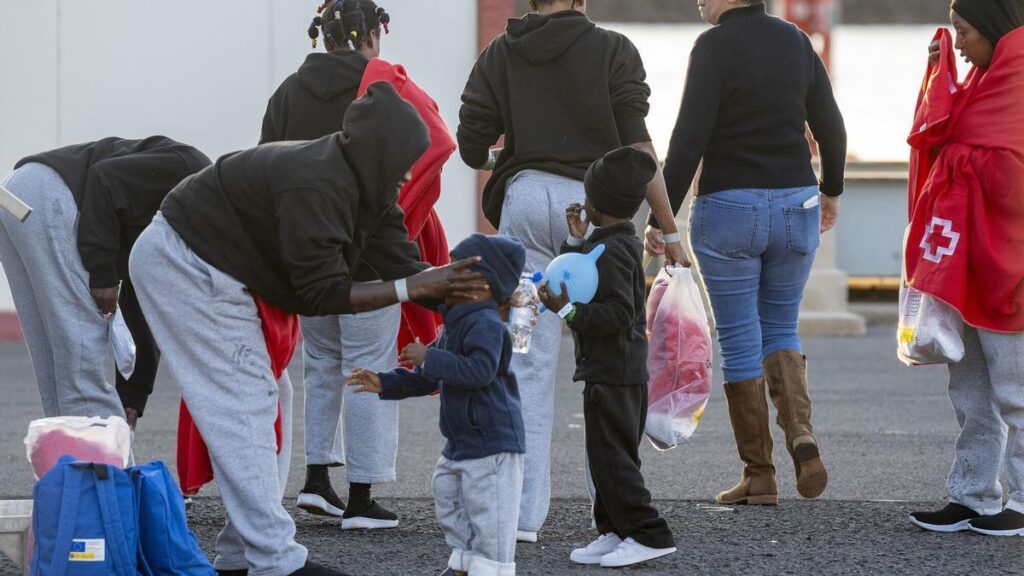
Friction between the Spanish state and the Canary Islands continues. Although the transfer of unaccompanied migrant minors with asylum applications is progressing without major hitches – particularly after a third ruling by the Supreme Court gave the central administration a “non-extendable” 15-day deadline to assume their care, which expired on 21 November – the process has opened a new front: the legal guardianship of the children. Nearly 578 have now been incorporated into the state network and their physical custody has been transferred, but the Canary Islands retain legal guardianship despite the distance from the children’s new places of residence. This situation has generated multiple doubts and administrative mismatches.
The Legal Burden of Long-Distance Guardianship
The new scenario means the Autonomous Community still holds the legal responsibility and obligations for monitoring the minors’ welfare, with all that this entails. Any decision regarding their legal or protective status formally remains with the Islands, even though the children now reside elsewhere in mainland Spain. The Canary Islands Government acknowledges that the guardianship of the children has historically been a point of tension with the state. The regional executive argues that the central administration should assume this responsibility, though they concede that the urgency of the transfers – driven by the saturation of the archipelago’s reception centres – has prevented both administrations from delving deeper into this debate.
A Legal Vacuum and Fundamental Principles
While the Supreme Court ruling states that Madrid must assume the care of minors applying for international protection, it does not clarify what happens to their legal guardianship or physical custody. This legal vacuum brings several fundamental principles into play, according to Lucas Pérez, a professor of Private International Law at the University of Las Palmas de Gran Canaria: cooperation between administrations and the best interests of the child.
Although disagreements between the governments continue, legislation establishes that guardianship of minors falls to an autonomous community. When a child is transferred to the mainland, the state “must not and cannot” assume that responsibility, which the Constitution attributes to the regions. The situation therefore requires regions to reach an agreement – backed by Article 35 of the Immigration Law – in the event of a transfer of guardianship for the adolescents. “The state cannot force an autonomous community to assume guardianship,” Pérez emphasises. But, although it legally still corresponds to the Canaries, “it makes no sense” for Madrid to disengage from all aspects related to the children’s custody.
Complications of Distance and Past Failings
This situation takes on greater significance considering that some minors’ centres in the Islands have been closed after a pattern of mistreatment and abuse in the facilities was revealed. Now, with the children kilometres away, it is “much more complicated to supervise everything.” In this context, the expert points out that the transfer of minors must include a legal provision allowing the state to manage all aspects derived from their custody while they are in the destination region, including their care, medical assistance, education, and documentation. As the state has an administrative presence across the entire territory, “it makes sense for the state itself to control the custody.”
Maintaining Contact Amid Ongoing Arrivals
Faced with this new situation, and with over 500 minors now on the mainland – a figure that will continue to rise as more young people arrive on Canarian shores without an adult relative – the Canary Islands assures that it maintains “permanent contact” with the centres where the children are placed. This is explained by the Director General for Child and Family Protection, Sandra Rodríguez, who adds that the reception facilities inform the Canarian government of any incident, request, or external activity the children undertake. She states that when the situation allows, technicians from the archipelago will travel to the mainland to visit the facilities.
“The minors must be cared for, but what is worrying is the existence of large-scale centres where they are in poor conditions,” Rodríguez underlines, referring to some of the reception facilities that had been open in the Islands due to the migration emergency. Following the transfers, the Director General asserts, the children – who were in overcrowded facilities in the archipelago, which at one point was responsible for over five thousand unaccompanied minors – are now in smaller, more suitable centres.
Broader Tensions and Ineffective Fast-Track Solutions
But tensions between the state and the Canaries extend beyond guardianship. This situation is part of a broader landscape of controversy. One of the relocated minors has already been denied their application for international protection while on the mainland, a decision that forces them to return to the Canary Islands. This case has led the Canarian government to explore alternatives, such that minors whose asylum is rejected after transfer could be cared for by other autonomous communities, under the migration contingency provision foreseen in the reform of the Immigration Law.
However, the so-called fast-track mechanism has also proven ineffective. To date, only 42 migrant minors have left the Islands through this procedure. This figure is insufficient considering that the Canarian coasts have received nearly 254 new arrivals in recent weeks. This process – designed for any unaccompanied minor to leave the region within 15 days – has on average taken between one and one and a half months.
No post found!