
From Local Hobby to Global Podium
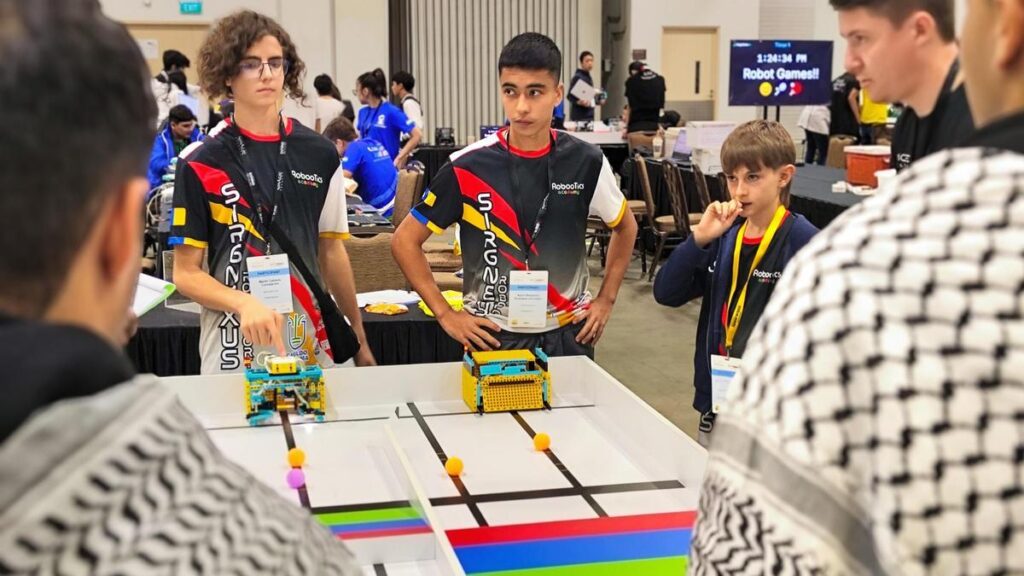
What began as a simple robotics hobby has propelled three students from La Palma to 24th place in the world, ranking among 111 teams from across the globe. The pupils, Martín Marzo and Martín Cabrera, both 13, and 16-year-old Aarón Rodríguez from Breña Baja, travelled halfway around the world to demonstrate their expertise. The young Canarians represented both their islands and Spain at the World Robot Olympiad (WRO) in Singapore, having earned their place by securing first position at the national championship held this year in Cáceres.
The Coach Behind the Success
Their teacher and coach, Jair Batista, has been driving the students’ technological evolution for two years through the Robootics Education programme, which offers specialised robotics courses in the Canary Islands. He describes the lads’ learning journey with a simple but passionate “brutal”. Batista has guided them through two of the most important moments in their robotics career: a gold medal at a Spanish championship and a world finals with the taste of victory.
The RoboSport Challenge
Singapore was the stage for a unique challenge: designing robots to play a form of tennis match where some balls must cross the net and others must be passed over. This was not an episode from an animated series, but the real-life ‘RoboSport’ challenge faced by the students from La Palma. The task combines robotics, strategy, and sporting spirit, requiring the design and programming of autonomous robots capable of competing in a technological showdown simulating a tennis doubles match.
“Training” these machines requires interdisciplinary knowledge in physics, electronics, and mechanics, among other fields, alongside an ability to tolerate frustration and find rapid solutions. “It’s a learning process that makes us want to improve from our mistakes,” emphasises Marzo. These skills align perfectly with the tournament’s ultimate goal: to promote scientific and technological vocations, foster teamwork, innovation, creativity, and a culture of effort, and bring science and technology closer to society.
National Triumph and International Camaraderie
The task is not simple, but the students successfully developed all the required disciplines. They had already demonstrated their commitment and strength by winning first place at the Spanish championship in Cáceres, which featured around 125 teams. Aarón and Martín had competed nationally before but never with such an unexpectedly stellar result. Marzo describes the win as an “explosion of joy”, very difficult to put into words.
Furthermore, “you could tell there was great camaraderie with the other competitors at the national championship,” states Rodríguez, who observed the enthusiasm of other regional teams who were happy for their victory when they won first place alongside his teammates. The boys highlight the “high level” of competition in Cáceres, a professionalism that was multiplied when they travelled to the world finals in Southeast Asia.
The three days were intense. Beyond competing, they had the opportunity to socialise with young people from other countries and learn about different strategies for tackling robotics challenges. The Palmeros formed a strong bond with students from Mexico, with whom they shared their interests during the three-day event. A common language helped forge these new friendships—”they even exchanged contacts,” assures their teacher—but the language barrier was no obstacle to connecting with peers from countries like Japan or the Philippines. “Some gave us gifts from their countries and we gave them Canary Islands magnets,” recounts Aarón Rodríguez.
A Prestigious Global Stage
The list of competing nations—from the Philippines and Japan to Mexico, Turkey, and El Salvador—grew to over 95 countries at the World Robot Olympiad. It is one of the world’s most prestigious contests in the STEAM (Science, Technology, Engineering, Arts, and Mathematics) field, attracting more than 70,000 students. This time, Spain placed 24th thanks to the work of Martín Marzo, Aarón Rodríguez, and Martín Cabrera.
Lessons Learned and Future Ambitions
Now back home in La Palma, they look back proudly on their feat while critically analysing all the “mistakes” and successes they want to refine for future competitions. The contest was tough. When the team realised the oversights they had made on the first day, “they were crushed,” says Jair Batista, while also highlighting how “quickly they knew how to pull themselves together.” According to Rodríguez, “there were complications during the tournament that stressed us, but we worked to resolve them.”
In Batista’s words, the students were barely back in the Archipelago before they were eager to return to class that same week and begin arduous preparations for next year’s competitions. Martín Cabrera is sure he will dedicate himself to something related to robotics, whether professionally or as a hobby. Aarón Rodríguez, the team’s most experienced member with seven years of robotics as an extracurricular activity, thinks the same. For his part, Martín Marzo states: “Robotics and computing are the order of the day. This knowledge will stay with me for life.”
No post found!