
Major Environmental Fraud Ring Dismantled
The Guardia Civil has dismantled a network of illegal scrapyards with bases in Gran Canaria, Fuerteventura, and Lanzarote. The ring, in collaboration with a scrapyard in the Community of Madrid, falsified environmental certificates to conceal the irregular handling of hundreds of heavy goods vehicles belonging to a transport company.
Operation Dilanio: Arrests and Charges
In ‘Operation Dilanio’, officers have shut down three clandestine scrapyards and are investigating eight individuals and three companies for alleged ongoing crimes against the environment and document forgery. It is estimated that over 10,000 vehicles were irregularly processed over the last four years, generating emissions equivalent to approximately 1,500 tonnes of CO2.
How the Illegal Operation Worked
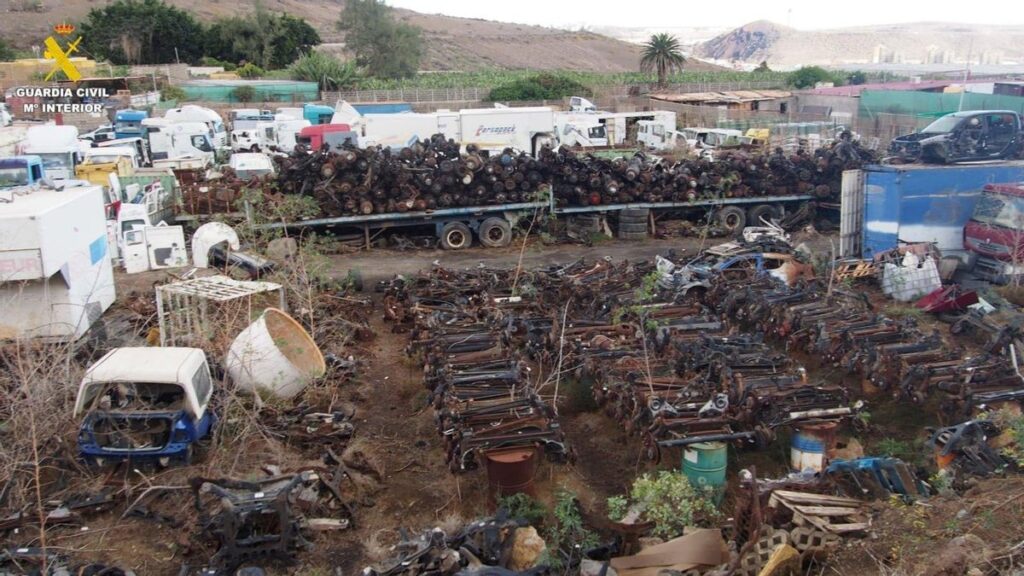
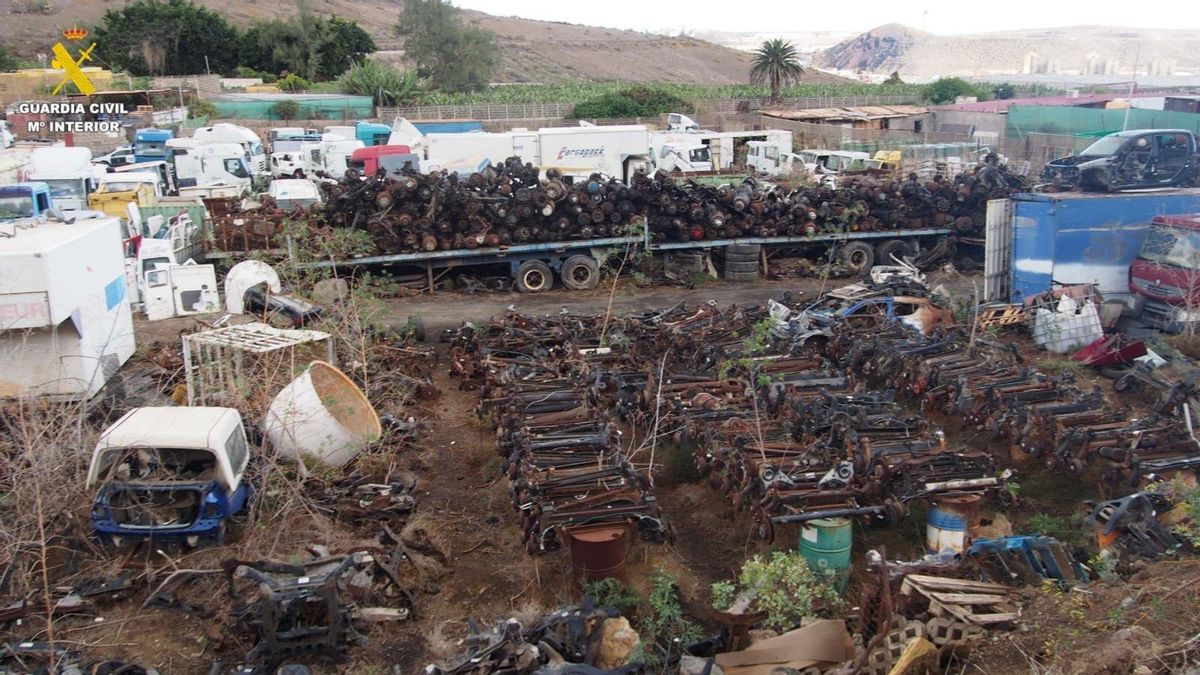
The investigation began when the SEPRONA environmental protection service in Las Palmas detected an unauthorised facility dedicated to the illicit management of waste on protected rural land. There, they located 44 heavy vehicles, both intact and partially scrapped, which originated from legally constituted scrapyards with which the network had commercial agreements.
The formal deregistration of these vehicles was processed through these legitimate scrapyards, which helped to mask the irregular origin of the operations. As the investigation progressed, officers discovered that a transport company had delivered more than 240 large vehicles to a scrapyard in Madrid for the purpose of deregistration and subsequent environmental treatment.
However, this establishment resold them as scrap metal, obtaining significant economic benefits and diverting the vehicles to other scrapyards in the province of Las Palmas. It was here that the necessary environmental certificates, meant to prove correct handling, were falsified.
Closures and Environmental Damage
As a result of the operation, two clandestine scrapyards and a third in the process of being set up were closed down. All were situated on protected rural land covering an area of more than 40,000 square metres. These facilities operated under the cover of authorised scrapyards located in industrial zones, which issued the falsified documentation while some vehicles were moved without being decontaminated or only partially treated.
Finally, SEPRONA confirmed that the activities under investigation involved the release of fluorinated gases into the atmosphere during vehicle dismantling, without any form of technical control.
No post found!