A Prestigious Recognition for a World-Class Telescope
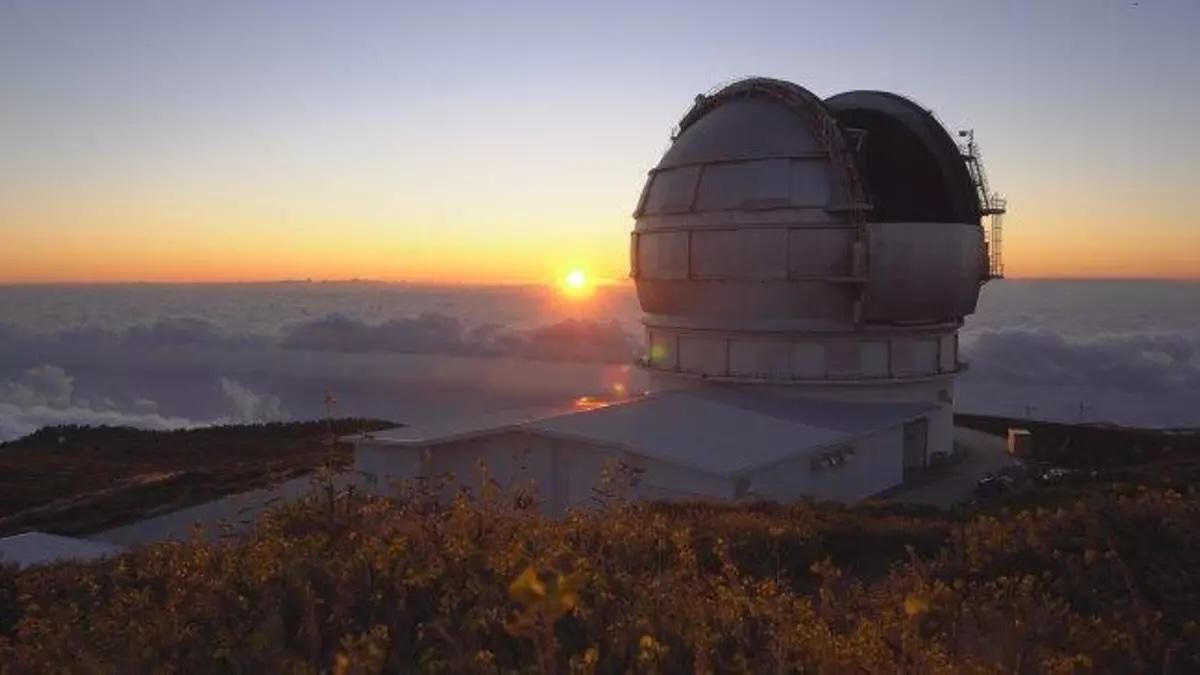
On Wednesday, November 18th in Madrid, the Ministry of Science unveiled Spain’s new Map of Unique Scientific and Technical Infrastructures (ICTS) for the 2025–2028 period. Among the confirmed names, one shone particularly bright: the Gran Telescopio Canarias (GTC or Grantecan). The largest operational optical telescope in the world has been ratified as a single-location ICTS, receiving an “extraordinarily positive” evaluation. The distinction—officially presented by the Secretary General for Research, Eva Ortega Paíno—is far from a mere symbolic gesture. It represents the renewal of the state’s commitment to an infrastructure located in one of the planet’s most privileged spots for observing the cosmos: the Roque de los Muchachos Observatory on La Palma.
Pride and Responsibility for the Grantecan Team
“Pride and responsibility,” was how the Grantecan team summarized their feelings after receiving the recognition. The pride comes from maintaining their position at the forefront of global astrophysics; the responsibility stems from the fact that this classification obliges them to meet the highest standards of scientific quality, open access, and technological production.
A Giant That Continues to Grow
Inaugurated in 2007 and in full scientific operation since 2009, the GTC is a technological jewel. It boasts a primary mirror measuring 10.4 meters, composed of 36 hexagonal segments, capable of capturing light from galaxies that were born when the universe was just beginning. Its inclusion on the ICTS map isn’t new—it has been part of it since 2007—but the especially favorable evaluation received in this cycle is. This comes at an ideal time: the Ministry has linked the ICTS to a strategic investment of more than 200 million euros in Feder funds destined to modernize major scientific installations.
Canaries: A Small Territory with Major Scientific Weight
The ratification of the GTC fits into a broader picture: the Canary Islands is the only autonomous community in Spain that combines sky, sea, and supercomputing in its ICTS ecosystem. In addition to the GTC, the region is home to the Canary Islands Observatories, the Oceanic Platform of the Canary Islands (Plocan), and two nodes of the Spanish Supercomputing Network. This collective infrastructure multiplies research capacity and attracts global talent.
More Than Just a Telescope
The GTC does more than just observe stars. It produces science, highly skilled employment, and technological opportunities for the islands. In recent years, it has driven the development of advanced instrumentation, collaborated with international agencies, and helped put the island of La Palma on the global astronomy map. With this ratification, the GTC enters a new stage ready to compete for new projects—including those that could decide the future of large optical astronomy—and to reinforce its role as a symbol of science conducted from the Canary Islands for the entire world. A unique sky, an exceptional infrastructure, and a country that renews its commitment to looking far into the distance. Very far indeed.