A milestone celebration for Gran Canaria tourism
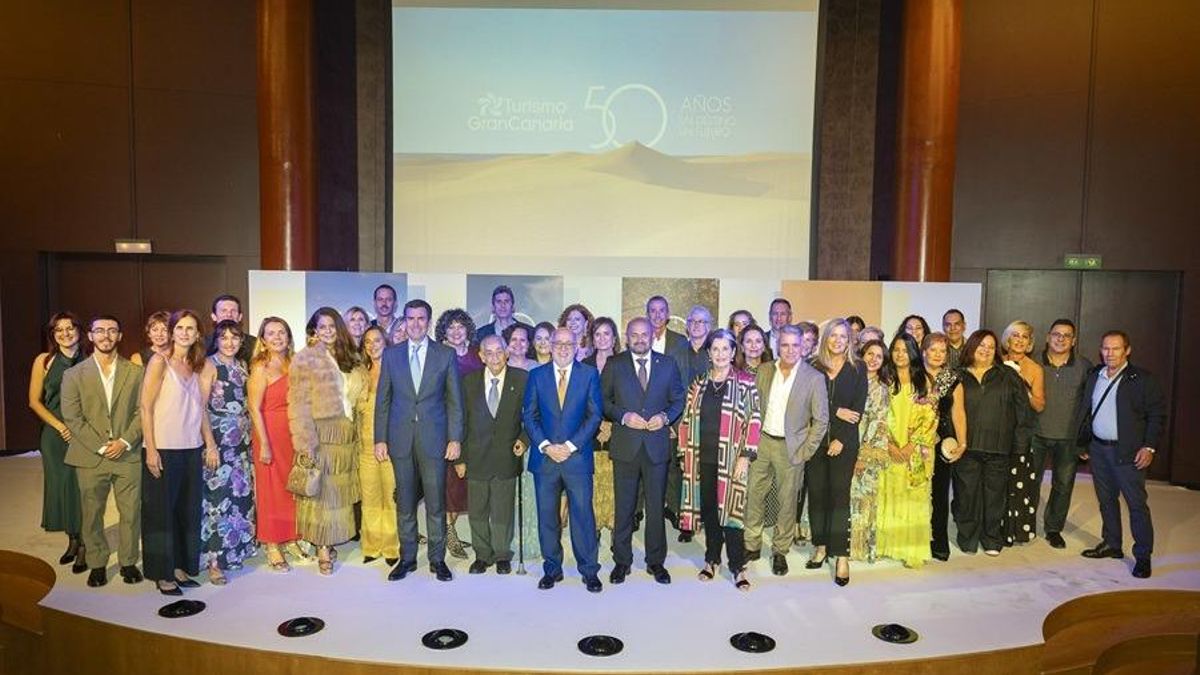
On Thursday, November 20th, Gran Canaria’s tourism sector marked a significant milestone with the opening event commemorating the 50th anniversary of Turismo de Gran Canaria. The celebration paid tribute to representatives from various fields connected to tourism, honoring both pioneers from the early days and current leaders. Under the banner “One Destination, One Future,” the emotional ceremony featured musical performances highlighting the island’s roots and remembered the people who transformed a modest initiative into the powerful beacon that guides Gran Canaria’s tourism today.
From humble beginnings to tourism powerhouse
The journey began in 1975 with the Provincial Tourism Board of Las Palmas, which initially included Lanzarote and Fuerteventura. The eastern islands experienced rapid growth, and by 1985, each island had established its own tourism board under its current name. What started as a team of five enthusiastic professionals with a modest budget of 5 million pesetas (€30,000) has evolved into an organization with €24.5 million budget, approximately 57 professionals and technicians, numerous partner companies, tourist offices in every municipality, and representatives in source countries to cover promotion, management, and destination analysis services.
Documenting five decades of transformation
The ceremony opened with a preview of the documentary “Turismo de Gran Canaria: 50 Years Driving a Destination,” scheduled for release before year’s end. This film combines archival footage with testimonies from key figures who shaped the island’s tourism transformation. The documentary serves as a sequel to the film about the history of the Center for Initiatives and Tourism of Gran Canaria (founded in 1934), expanding from seven interviews in the original to sixteen in the new production. Together, these documentaries provide a comprehensive history of tourism on the island up to the present day.
Voices from the front lines
The documentary preview featured numerous contributors sharing insights about the origins, evolution, achievements, and challenges of the tourism institution. José Ortega, one of the first staff members, recalled the early evolution and the people who made it possible. Other participants included Carmen Cruz, daughter of the first manager Antonio Cruz Caballero; journalists Marta Cantero, Mario Ferrer (also a historian), and myself; architect Luis López (designer of the first Riu hotel on the island and ‘hotel architect’ for numerous developments); Águeda Borges (vice president of FEHT); artist Pepe Dámaso; and current manager of Turismo de Gran Canaria, Pablo Llinares.
Vision for sustainable tourism future
Tourism Councillor Carlos Álamo opened the institutional speeches by focusing on the sector’s evolution and the destination’s resilience through crises like major tour operator bankruptcies and the 2020 “zero tourism” period. He emphasized that the model change is already reality: “We’ve moved from measuring success by numbers to measuring it by destination spending, quality of experience, and the social benefits tourism generates.”
Cabildo President Antonio Morales placed the anniversary within the broader vision of the “Eco-island” project, warning that future challenges involve territory protection and responsible management of a destination with finite resources. He noted that while tourism was an incipient opportunity in 1975, half a century later it represents “the grand doorway through which economy, modernity, and cultural exchange enter.”
Recognizing five decades of dedication
One of the evening’s most emotional moments came with the recognition of the institution’s workers, represented by José Ortega and Victoria Hernández, who received distinctions on behalf of all people who have been part of the Tourism Board and Turismo de Gran Canaria during these five decades. A second video showcased the institutional and programmatic aspects of Turismo de Gran Canaria’s work, featuring additional perspectives from tourism professionals and creative figures connected to the island’s cultural heritage.
The deep roots of Gran Canaria tourism
The celebration allowed attendees to travel through time and imagine the island’s tourism history—a long process spanning more than 150 years since the first ‘travelers’ began appearing on the islands. Throughout this history, one constant has been health tourism, beginning with the climate, spas, the heliotherapy center in the dunes, the Svenska Re rehabilitation center in San Agustín, the Gloria Palace spa, and the current wellness explosion.
Returning to the proto-tourism of those first travelers, it becomes clear that connectivity is everything in tourism activity. Without the maritime lines connecting the British Empire, there would have been no reason for hotels, the golf club at Lomo del Polvo, or medicinal water spas. This opportunity was seized and led to efforts to create a distinctive brand with Nestorian typicality. Another historical milestone was the impact of Maspalomas Costa Canaria, which combined the push for air connectivity with a change in tourism model and the emergence of Gran Canaria’s ‘invention’: the bungalow and the dreams of the count to transform this enclave into the best tourist destination in the Atlantic.
Pioneers and visionaries who shaped the island
The island’s tourism history can also be told through its pioneering entrepreneurs—from Horesa, Hoteles Selectos, Amurga, and Protucasa to adventurers like Lilo Kellerman (Lilolandia, Bahía Feliz), Rafael Neville (Puerto Mogán, the Marbella of the Atlantic), Helga Masthoff (the tennis players’ hotel in Palmitos), and Bjorn Lyng (inventor of oil drilling head patents and Elsafe safes, and precursor to the international time-sharing empire Anfi del Mar).
Tourism as a driver of modernity and resilience
Tourism also represented an advance of modernity and freedoms on the island. The years preceding the creation of the Tourism Board were the final years of a model lacking freedoms with political and moral control, which generated distrust among northern Europeans. But changes were already occurring with the arrival of ‘the Swedish women’ or the inauguration of the Ecumenical Temple—the first European tourist destination with a place of worship that brought together European Christian denominations.
Another way to narrate tourism evolution is through resilience in facing crises. The Tourism Board was born under the Damocles sword of the oil crisis, and three months after its establishment, the dictator died. Later came the attack at the Gran Canaria airport and the Los Rodeos accident between KLM and Pan Am planes, which scared away American tourism (20% of the island’s total); the 1978 general hospitality strike that caused tourism to decline until 1982; and subsequently, the 23-F coup attempt.
Charting the course toward sustainable tourism
Today, the destination faces constant surprises from external threats (geopolitical and economic framework, competing destinations) and internal challenges (social dissatisfaction with tourism due to population pressure in limited territory). Yet Turismo de Gran Canaria maintains its course toward sustainability and quality: Biosphere, Sicted, Biosphere Reserve, World Heritage of Risco Caído and the Sacred Mountains, Starlight Reserve, Guguy National Park. These are new steps that began decades ago, during which the territory has been progressively restored: Osorio, Tirma, Finca del Galeón estates and Life projects.
The model change is underway with private and public initiatives: eco-estates like Veneguera, examples of governance seeking energy, water, and food sovereignty. Transformations that wouldn’t be possible without tourism’s economic support, just like the cultural and sports boom of our island. The commemorative event serves as the starting point for a calendar of activities that will unfold over coming months, including conferences, exhibitions, the full documentary premiere, and other actions that will deepen understanding of the island’s tourism history and the challenges defining its future.