
Fasnia Bets on Sustainability with New Artificial Wetland
Fasnia is making a firm commitment to sustainability and environmental conservation. The Los Eres Environmental Centre is set to become the key site for the creation of an artificial wetland, an initiative driven by the Tenerife Council and the Moeve Foundation. The project aspires to become a refuge for local and migratory birds while simultaneously serving as a tool for environmental education and climate change adaptation.
A Significant Advance for Island Biodiversity
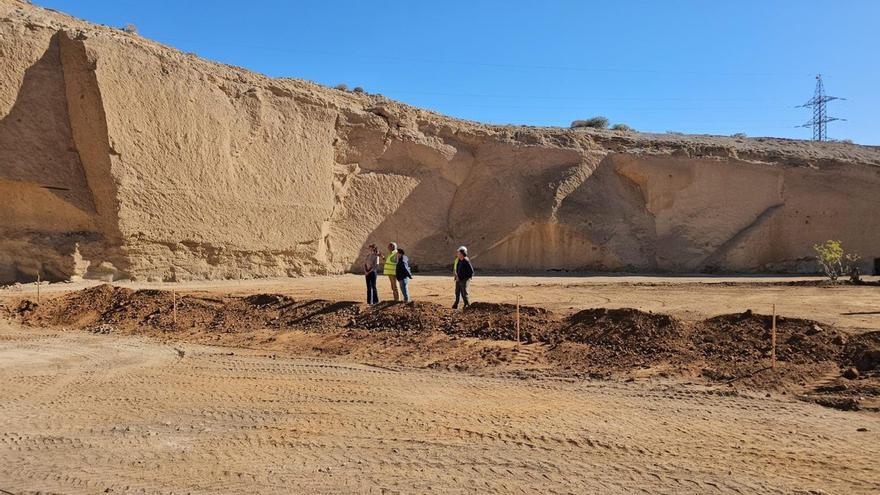
The launch of the artificial wetland represents “a significant advance within the island’s strategy for biodiversity protection and climate change adaptation,” explained the island’s Minister for the Natural Environment, Sustainability, Security, and Emergencies, Blanca Pérez. She visited the site alongside the head of the Moeve Foundation in the Canaries, Belén Machado, and the island’s Director of the Natural Environment, Pedro Millán.
This pilot project will generate scientific knowledge, favour bird conservation, and bring the ecological value of these ecosystems closer to the public. Wetlands are essential for hydrological balance and the survival of numerous species, particularly steppe, migratory, and wandering birds. Conceived as a pilot experience, it will allow for the analysis of how birdlife responds to the new environment. The results will form the basis for assessing a possible future expansion of the water body and improvements to the space, consolidating it as a stable resource for research and environmental education on Tenerife.
An Open-Air Laboratory for Community Engagement
Belén Machado emphasised that this initiative reflects the Moeve Foundation’s commitment to projects that integrate conservation, research, environmental outreach, and social participation. In her view, the Los Eres wetland is shaping up to be both a refuge for numerous bird species and a genuine open-air laboratory that fosters public involvement, highlighting the importance of public-private collaboration in protecting the natural environment.
The project includes specialised technical monitoring of the birds, which will allow for the evaluation of the wetland’s adaptation and its use by different species. This control will facilitate decision-making to adjust the site’s conditions, encourage the arrival and settlement of migratory birds, and guarantee the protection of local biodiversity. Pedro Millán stressed that initiatives of this kind demonstrate that it is possible to integrate conservation, research, and environmental education, reinforcing Tenerife’s commitment to sustainability and the defence of its natural heritage.
Revegetation and a Focus on Education
The works also contemplate the ‘revegetation’ of the surroundings with native species from the basal and thermophilic zones, contributing to the recovery of the original ecosystem. Spaces dedicated to environmental outreach and awareness for schoolchildren, social groups, and the general public will also be created.
The new wetland will have a strong social and educational dimension. Environmental education and volunteer programmes are planned, aimed at fostering the active participation of the community in the conservation of the island’s aquatic ecosystems, while also promoting physical and emotional well-being through direct contact with nature.
Aligned with Tenerife’s Broader Strategy
The initiative falls within the Tenerife Biodiversity Strategy 2020-2030, which aims to protect the island’s most sensitive habitats and reduce the impacts of climate change. With this push, the Moeve Foundation reinforces its commitment to biodiversity conservation, positioning wetlands as key ecosystems for Tenerife’s environmental future. The Los Eres Environmental Centre is being consolidated as a strategic site for research and scientific outreach, in line with the principles of the Ramsar Convention, which recognises the ecological and functional value of artificial wetlands and promotes their conservation alongside natural ones.
No post found!