

A Geological Giant
With over 27,000 years of history, the Cueva del Viento in Icod de los Vinos has established itself as one of the most important caves of its kind in the world. Its surveyed length of 18.5 kilometres makes it the sixth-largest lava tube on the planet and the largest in Europe. Its formation as a labyrinthine network with multiple, interconnected levels and galleries further cements its status as one of the most remarkable.
A Hidden World of Unique Life
This volcanic tube, created by lava flows from the Pico Viejo volcano, is also of exceptional biological importance. It possesses a significant troglobitic fauna—species entirely adapted to life within the volcanic cavity. In fact, some are endemic to Tenerife, while others are found exclusively in this particular cave. Esther Martín González, curator of Palaeontology and Geology at Tenerife’s Museum of Nature and Archaeology (MUNA) and the scientific lead for the Cueva del Viento, explains this unique ecosystem.
The cave is home to a total of 190 known species, 44 of which are troglobitic. According to the official Cueva del Viento website, “among these species condemned to live in darkness, 15 have turned out to be new to science, such as the blind cockroach Loboptera subterranea or the carabid beetles Wolltinerfia martini and Wolltinerfia tenerifae.” The expert notes that all species inhabiting this space are remarkable, having adapted to the environment and living under extreme conditions, for example, by losing their sight.
This is no surprise, as total darkness, extremely high humidity, and a constant temperature define the subterranean environment. Food is scarce, making adaptability especially important for survival. This evolution often involves dispensing with unnecessary organs.
Spiders: Masters of Adaptation
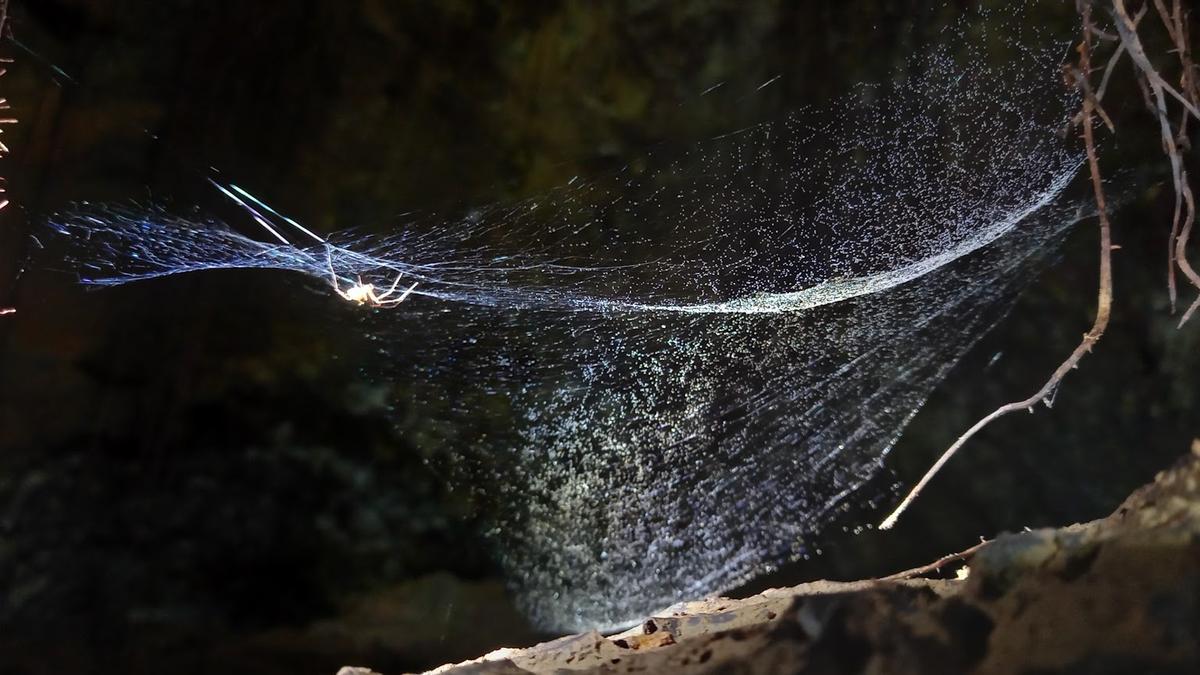
For Esther Martín, one notable group within the cave’s fauna is the spiders, due to their wide diversity and their specific adaptations. An example is the dysdera spiders. While several species exist both inside and outside the cavity, those that have evolved inside the cave tend to have a much paler colouration, lose pigmentation, and have lost their sight. Furthermore, their joints and antennae are typically longer than those of their surface-dwelling relatives. “These are adaptations to total darkness,” clarifies the expert.
An Exceptional Fossil Record
Another defining characteristic of the Cueva del Viento is its status as an excellent palaeontological site. This is because “the environmental conditions are very stable,” explains Martín, allowing for “the very good preservation of fossil remains.” Inside this cavity, remains of the Tenerife giant rat and the Tenerife giant lizard have been found, along with some small birds that had lost their ability to fly.
In this field, Esther Martín highlights the discovery of houbara bustard remains. This is a species that can be found today in Lanzarote and Fuerteventura, but which is now known to have inhabited Tenerife.
Traces of the First Inhabitants
The volcanic tube has yielded more than just animal remains; it also holds traces of Guanche history. The first discoverers of the cave back in the 18th century found aboriginal remains, such as ceramics and tools.
No post found!