
Canary Scientist Leads European Quest to Solve Feral Cat Conflict
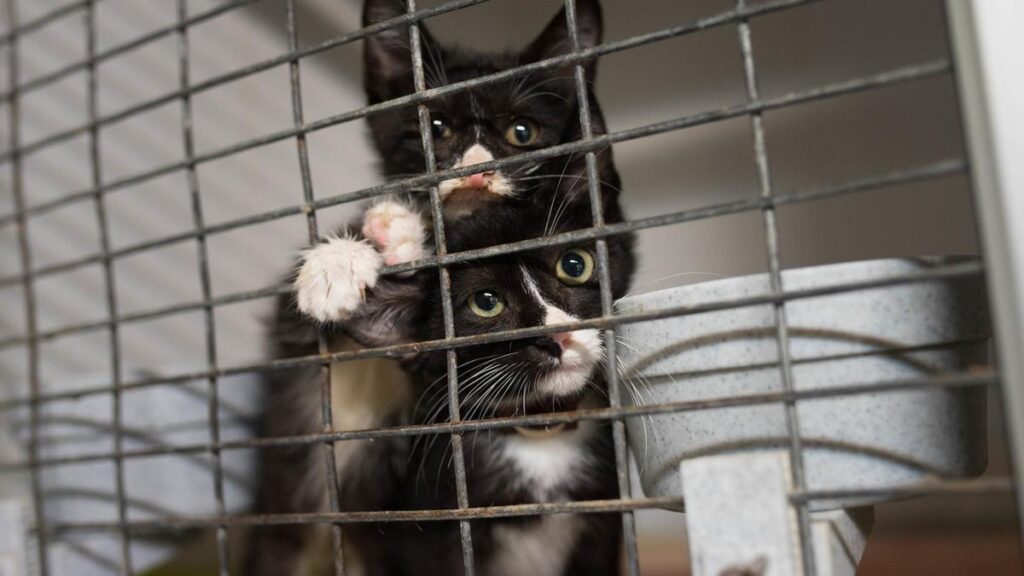
A researcher from the Canary Islands has been selected at a European level to tackle a headache-inducing problem common to most regions: what to do about feral cats and, crucially, how to find a solution that satisfies everyone. Pablo Alonso, who considers himself an adopted Canary Islander—born in León but long resident in the Islands—faces a significant challenge. Ask a biologist or ecologist, and they will tell you these felines are a threat to biodiversity, particularly endemic species. Approach an animal welfare advocate, and they will express concern for the cats’ wellbeing, arguing they can be fed or live in managed colonies.
A Polarising Problem Demands a New Approach
Public Health officials may view them as potential transmitters of diseases to humans. Within a single residential community, you will find homeowners opposed to them and others who even feed them—often women, colloquially known as ‘cat ladies’. In rural areas, a similar divide exists: hunters see them as enemies that kill their game, while farmers use them to stop mice from eating their crops. Faced with this complex landscape, one question arises: is there a realistic formula for addressing this conflict? Pablo Alonso, a researcher at the Institute of Natural Products and Agrobiology (IPNA) of the Spanish National Research Council (CSIC), is searching for an answer. Thanks to a prestigious European grant, a solution seems increasingly within reach.
Prestigious Grant Fuels Groundbreaking Project
With his project, Frontcat, Alonso is the first CSIC Canarias researcher to secure a Consolidator Grant, one of the most prestigious scientific fellowships in Europe. In the Canaries, only about six people from other institutions like the University of La Laguna (ULL) or the Institute of Astrophysics (IAC) have previously achieved this. The grant, awarded by the European Research Council (ERC), provides an injection of two million euros over five years. This funding relieves him from the constant worry of seeking financial backing, a major headache for scientists in Spain.
“It’s a turning point in my career because this is every scientist’s dream,” he highlights. “But it will also have an impact on the Archipelago because this project will bring research talent to the territory and promote the study of Social Sciences and Humanities.” Specifically, six more people will join Alonso’s study to give it an anthropological, historical, and gender perspective.
Developing a Multi-Species Governance Model
His work starts from a simple idea: many cats live and move between homes, farms, feline colonies, and natural reserves, creating tensions between biodiversity conservation, animal welfare, and traditional uses and customs related to cats. To manage this, he will develop a multi-species governance model that considers cats as active actors in the conflict, not just passive elements. For the grant-winning researcher, behind this ambitious approach lies a clear intention: to transform an everyday problem into excellent knowledge and useful tools for coexistence.
In the short term, it will provide applicable solutions for municipalities and organisations. In the medium and long term, he underlines, it will place Europe at the forefront of “a paradigm shift,” exportable to other human-animal conflicts. The work will therefore create a framework for action that will not only help better understand the conflict with feral cats but also create a roadmap for managing similar problems in other territories. This framework can be adapted to other animals, such as bears or stray dogs.
A Critical Issue for Canary Islands Biodiversity
“You cannot make the mistake of thinking that controlling a pigeon is the same as controlling a wild boar,” he argued. “The cat, for example, requires very special governance because it adapts to many environments, lives alone or in colonies, and is very flexible. In the past, to try to control the population, raids were organised to collect and kill them, but even then it was very difficult to catch them.”
In the Canary Islands, the problem with these felines is even more acute given the wealth of endemic flora and fauna the Archipelago harbours. “It is an especially critical conflict in the Islands and, given the social polarisation it generates, it is essential to address it,” argued the expert. “Top-down responses are insufficient; we need governance that integrates local knowledge, rural values, expert understanding, and also the knowledge acquired through caring for animals.”
Documenting the Conflict from All Angles
The project will also include an audiovisual component documenting the problem from different perspectives, involving all stakeholders. Thus, they will place cameras in feline colonies to see how cats cared for by volunteers behave, and they will ask biologists for recordings to see how they hunt at night. “We can all see the conflict from different points of view,” he points out. “What we want is to generate forms of coexistence and solutions that satisfy everyone a little, bearing in mind that, as in any social conflict, there will always be someone who disagrees.”
No post found!