
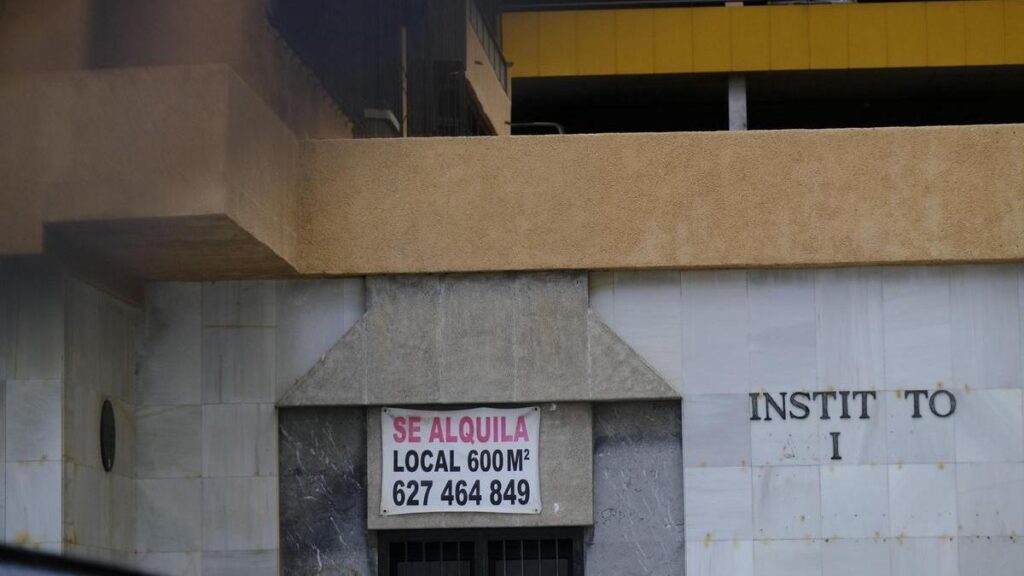
Housing Emergency Grips the Canary Islands
The average salary for young Canarians makes renting a home practically impossible. The housing emergency continues to intensify across Europe in general, and in the Archipelago in particular. The reasons are rooted not only in a lack of housing supply and new construction but also in the strong demand accentuated by the islands’ appeal as a tourist destination for foreigners – who see the Islands as an opportunity for a second home – and non-residents. Although the age of leaving home in Spain is one of the highest in the European Union – currently 30 years old – far from being a choice or a cultural matter, the calculations of the average price per square metre for rent in the Canaries and the base salary of islanders under 25 simply do not add up to the possibility of independence.
The Stark Numbers: Rent Versus Wages
Properties in the Archipelago have an average size of 80 square metres, according to the Idealista property portal. Furthermore, the rent per square metre rose in November to €15.10, based on data from the same company, which also highlights a 7.4% increase compared to the same month the previous year. This means the average rent is above €1,000 per month. Specifically, it is around €1,208 for a flat, while young Canarians earned an average gross salary of €1,372.80 in 2024, according to the Wage Decile data from the National Statistics Institute (INE) based on the Active Population Survey (EPA).
A salary which, after the corresponding social security deductions and income tax withholdings, results in approximately €1,070.17 per month. Therefore, under-25s would not only have to dedicate 100% of their salary to their flat, but would also be forced to borrow an additional €140 or so to cover this expense.
A Perfect Storm of Low Wages and High Costs
Under-25s typically have the lowest salaries, with reasons including a higher proportion of part-time work, temporary contracts, and less job seniority. But furthermore, in 2024 the average gross salary in the Islands was the lowest in Spain. Adding to this is the increased cost of services and the fact that the Canary Islands’ shopping basket is one of the most expensive in the country, making the prospect of leaving home almost a utopia.
The scenario is far from encouraging and the alternatives are limited to continuing to live in a family member’s home or searching for a flat to share. Even so, the latest Fotocasa report on flat-sharing in Spain from last year explains that young people have not lost hope. Far from showing pessimism, surveys indicate that younger age groups still consider homeownership a priority. They also associate housing with economic stability and as a way to build assets, and trust they will be able to access it, even if in the medium term.
The Reality of Flat-Sharing
However, there is a long road between theory and practice, and the reality is dictated by housing market prices. The truth is that a high percentage of young people are forced to share a flat. The sociodemographic profile of those seeking to rent a room reveals an average age of 33, and that 44% are between 18 and 24 years old. This is, in fact, the group with the greatest need to share housing, in many cases due to precarious wages or because they are directly unemployed and depend on others’ income.
The situation becomes even more complicated at this life stage when it coincides with university or training periods, during which many islanders must move to another area to continue their studies with renting a property as their only option. While the analysis paints the reality of the national picture, it serves to broadly describe the profile of the tenant in the Archipelago. The property portal points out that activity in the private housing market among 18 to 24-year-olds has fallen by five percentage points, from 35% in 2023 to the current 30%. With greater difficulties in renting, fewer people consider the possibility of moving.
Impact on Life Development and Frustration Grows
The result, according to Fotocasa, is reflected in the frustration of a sector of the population, as the impossibility of becoming independent impacts citizens’ development and the evolution of their life cycle. When sharing is done out of obligation and not by choice, issues like birth rates or mental health are adversely affected.
Those who share now were already renting previously. Some 57% of those who managed to rent a room in a shared flat across the country were already living in rented accommodation. This translates to almost six out of every ten people who shared a flat in 2023 have continued to do so; in fact, it is a similar percentage to the previous year. Another 22% lived in a home they owned and 21% resided in a property owned by a family member for which they paid no rent. The distance between these last two options has narrowed slightly in the last year, hinting that young people cannot afford the expense of becoming independent given the high cost of housing and their salary income.
No post found!