
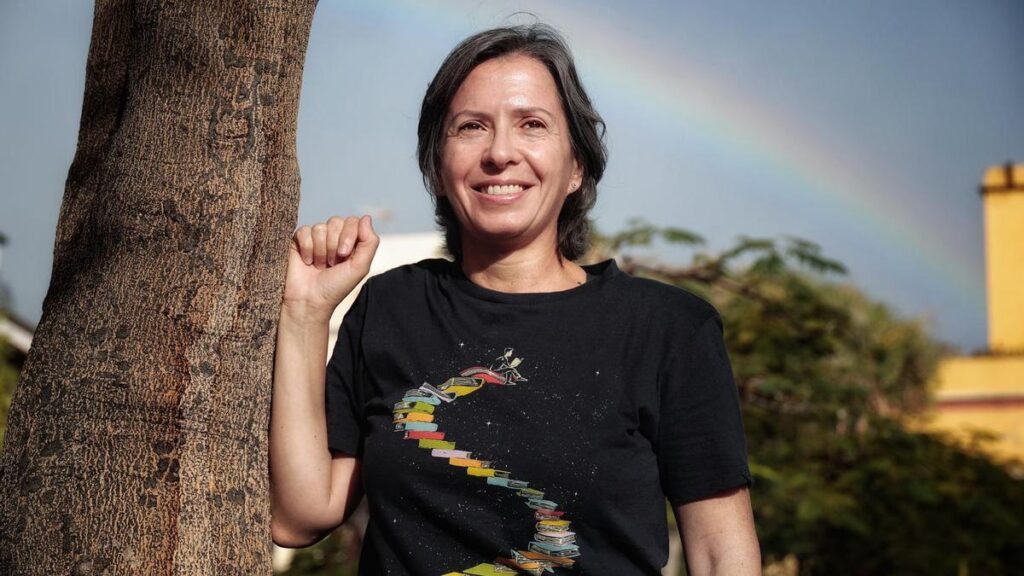
Meteorologist Sounds Alarm Over Coastal Fatalities
Vicky Palma, the once familiar face of weather forecasting on Canarian Television, now analyses meteorological risks for adverse phenomena at the Autonomous Community’s 112 emergency service. She has voiced deep concern over the 57 sea deaths recorded so far this year, 22 of them on Tenerife. Reflecting on a recent tragedy at a natural pool, she stated, “Yes, for me it was an act of recklessness. The pool area had been fenced and sealed off for days, with clear warnings that access was not possible.”
The Deceptive Danger of a Calm Surface
“It’s true the sea’s appearance could be misleading,” Palma explains. “There was no wind, and when there are gusts you can see the sea get a bit choppy, but the danger of the groundswell isn’t obvious. When this phenomenon occurs, waves keep coming to shore. Some are small, but others can reach significant heights, and you never know when they will break.” The incident coincided with a high tide and a set of long waves that completely swamped the pool, sweeping several people away.
Island-by-Island Breakdown of a Tragic Toll
The official death toll at sea now stands at 57, according to the Canary Islands Government’s figures. Palma notes, “I know other statistics, like those for the Canaries’ 1,500 km of coastline, count slightly more, but they include swimming pool deaths.” The regional government’s website, infoplayascanarias.es, logs sea incidents involving fatalities: 57 this year, following 65 last year. In 2025, Tenerife has the most severe problem with 22 deaths, followed by Gran Canaria (13), Lanzarote (10), and the rest spread across the other islands.
Warnings Ignored: A Crisis of Common Sense
On what can be done, Palma is unsure. “In most bathing areas, many town councils have taken measures following the Coasts decree; there is information in several languages and flags on the beaches. However, people pay no heed, even with lifeguards, red flags, and all kinds of signage.” In fact, local police in Santiago del Teide had confrontations with bathers the day before the Isla Cangrejo incident, trying to clear people from the pool. “I think we are lacking a bit of common sense. Perhaps more than a bit. It’s a mix of a lack of common sense and sheer recklessness.”
Respecting the Atlantic’s Unpredictable Power
Palma believes many underestimate the sea. “I think they are unaware of what our sea can unleash when it is stirred up—unpredictable and complicated, as befits the Atlantic. They are not conscious of the risk, because we have a difficult coastal environment.” She points to Garachico, where houses have doors at a certain height and no ground-floor windows due to the sea’s ferocity. “The ancestors, who were wise, had the entrances at the back of the houses to avoid the impact.”
“I believe a rough sea is a point of attraction because it is very striking, but you must not put yourself in danger or get too close. You can enjoy its power from a distance without any problem.” She also highlights the role of social media. “It’s true that social media encourages photo-taking, and Instagrammers take risks, especially in places where waves break, to get the best image. What can happen in such a situation is you lose your life.”
Gaps in Public Weather Warnings
It must be clarified that in the week of the Los Gigantes incident, there were no warnings from the State Meteorological Agency (Aemet) about the state of the sea. “The reason is that Aemet’s reports on coastal phenomena are oriented towards navigation, not the use and enjoyment of bathing areas.” The same applies to calima (sand haze). “Warnings about suspended dust were always aimed at air traffic, at low visibility. But we know that calimas in the Canaries aggravate respiratory illnesses, increasing treatments for certain ailments in health centres. That’s why the pre-alert is also issued to the Canary Health Service (SCS).”
Beyond the “Eternal Spring” Myth
Palma argues that the islands’ “eternal spring” advertising slogan has been believed even by locals. “But there are areas, in Tenerife and other islands, where in winter it is very cold, even more so than in parts of mainland Spain—not so much because of the temperature but the combination of temperature and humidity. We imagine we live in an eternal spring, but it’s not always like that.”
While there is evidence of climate change, she does not perceive an increase in extreme weather events. “I’d even say in recent years we have had fewer.” However, she notes clear trends: “Heatwaves are lasting more days, temperatures are notably high, and our houses are not prepared for these heat peaks. Air conditioning is not standard in homes. Perhaps what we must do is adapt to the new reality: more heatwaves, irregular rainfall, fewer days of snow—though it will likely snow this weekend. The number of tropical nights with very high minimum temperatures is also increasing. These are the effects of climate change on the islands.”
No post found!