
Canary Islands Tenants Brace for Major Rent Increases
Nearly 40,000 households in the Canary Islands are anxiously awaiting the renegotiation of their rental contracts, signed back in 2021. Five years have passed since they became tenants, and now – according to the deadlines set by the 2019 modification of the Urban Leases Law – the time has come to revisit the terms. Once this five-year period ends, property owners are no longer limited to applying increases based on the Consumer Price Index (CPI); contracts can be terminated or revised based on current market conditions.
A Market Transformed Since Pandemic Years
The core issue is that the current housing situation in the Canaries bears little resemblance to that of 2021, when the pandemic paralysed activity and contained prices. This renegotiation could therefore lead to rent increases of up to €2,267 per year. In other words, nearly €200 more per month. This is an amount many families will be unable to afford, forcing them to abandon the home that has been theirs for the past five years.
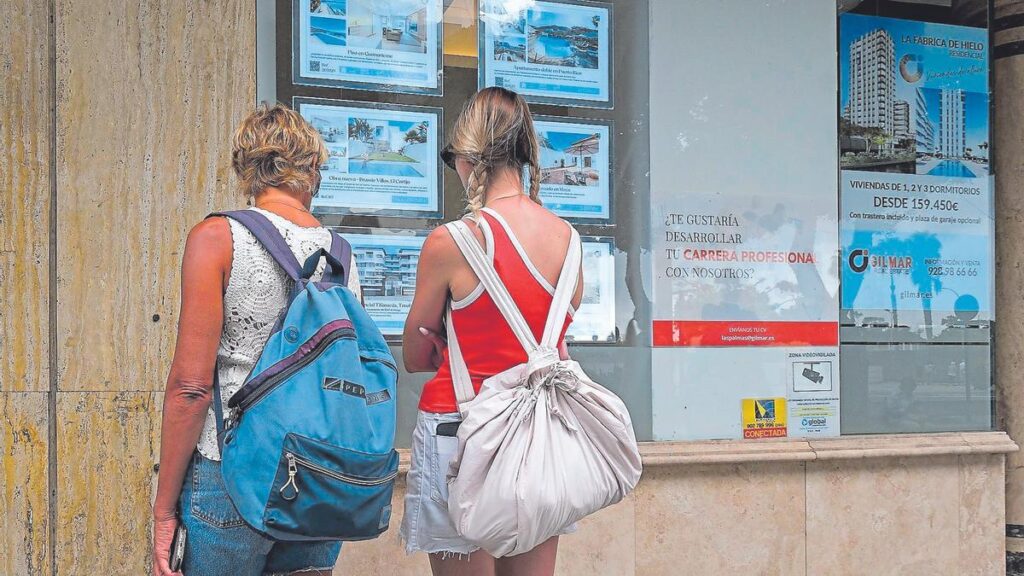
Compounding the problem is a lack of alternatives within the Canary Islands property market. Housing for sale has experienced an almost unprecedented rise, pushing homes beyond the reach of the average Canarian budget. Simultaneously, the rental market suffers from a scant supply of properties, available at prices that are exorbitant for many locals.
Among the Highest Hikes in Spain
The Ministry of Social Rights, Consumer Affairs and 2030 Agenda further calculates that Canarian tenants will be the third most affected in the entire country by rising rental prices. This is unsurprising given that the Archipelago has been one of the autonomous regions where the cost of renting has grown the most in recent years, driven up by foreign demand, holiday lets, and scarce supply.
The potential €2,267 annual increase is well above the national average rise for rentals, which stands at €1,735. Only tenants in the Balearic Islands, who could face hikes exceeding €4,000 per year, and those in the Valencian Community, with a figure closer to the Canaries at €2,686, are forecast to see larger increases.
Scale of the Problem and Political Calls for Action
The central government estimates that 97,137 people are affected by this contract renegotiation in the Canaries. Across Spain, the figure rises to 1.6 million. The department led by Minister Pablo Bustinduy extracted this data from the Household Panel (compiled by the National Statistics Institute, the Tax Agency, and the Institute for Fiscal Studies), which estimates the number of rental contracts signed each year nationwide at over 600,000.
Faced with this situation, Minister Bustinduy urged the PSOE at the beginning of the month to prioritise and urgently extend the rental contracts due to expire throughout 2026.
A Fleeting Respite in a Soaring Market
Rental price data from last November provided one of the few recent pieces of good news for tenants in the property market. The Canary Islands was the only autonomous community where the average rental price fell in the eleventh month of the year compared to October’s figures. The average rent in Spain reached €14.08 per square metre in November, a figure 1% higher than the previous month and 18% above that of November 2024.
From Temporary Solution to Only Option
Not long ago, renting was merely a temporary phase in life for most Canarians. It was common to rent a flat or a room during student years or early adulthood, but many citizens ended up buying their own home later. Now the reality has changed, and renting is the only alternative for many families in the Archipelago, a trend mirrored across the country.
“The rental market in Spain is experiencing unprecedented tension because supply simply does not meet demand,” states Ferran Font, Director of Studies at pisos.com. “For many citizens, renting is no longer a temporary stage, but the only possible route due to an inability to access home ownership from a lack of prior savings or tight salaries. This is especially notable among the young, who even need family help to rent,” he added.
Consequently, what was a more affordable temporary option years ago has now become obligatory. The problem is that rental prices have grown so much that they are no longer even cheaper than buying a house – an option also complicated by job instability and the lack of prior savings required from the buyer. This creates a property context where citizens are left without a housing solution, unable to either buy or rent.
No post found!