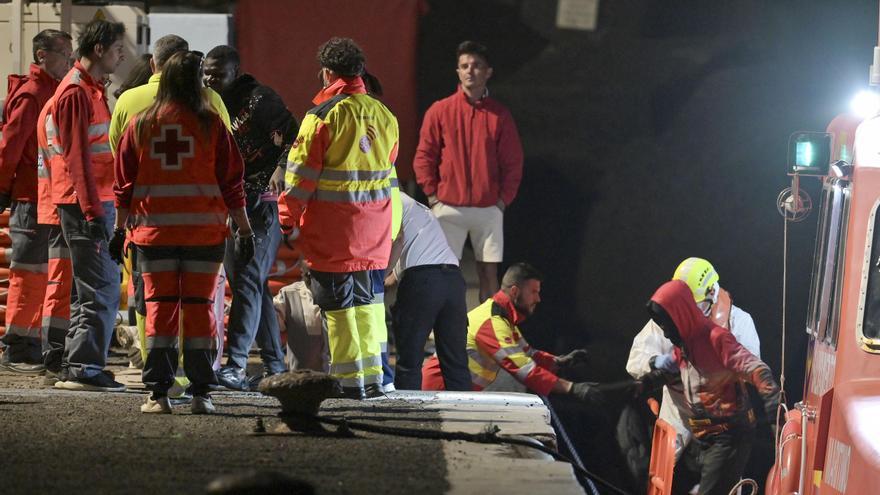
A Quieter Shore in Bargny
In the fishing settlement of Bargny, just 30 kilometers from Senegal’s capital, Dakar, the sea no longer whispers with the same desperation it once did. This town, a symbol of the migration drama gripping West Africa, seems to be breathing a sigh of relief lately. Between 2023 and 2024, local authorities estimate that nearly 3,000 people from Bargny alone risked the dangerous crossing to the Canary Islands. Now, although the town hall lacks updated records, the human tide appears to have calmed.
A Dramatic Drop in Atlantic Crossings
Preliminary figures from Frontex, the European Border and Coast Guard Agency, confirm this trend. In the first ten months of 2025, the route from West Africa to the Canary Islands saw a dramatic 59% decrease, with just over 14,100 detections. The majority of those who risk their lives on this corridor are from Mali, Senegal, and Guinea, three nationalities that map the exodus in the region.
The Factors Behind the Decline
“The decline observed this year can be explained by a combination of factors: first security, then political, economic, and finally, circumstantial ones,” highlights Aly Tandian, a professor at Gaston Berger University in Saint-Louis and president of the Senegalese Observatory of Migrations. The academic emphasizes that this year, “regarding the reinforcement of control and surveillance systems, greater cooperation has been observed between the European Union (EU) through Spain, and the states of West Africa, as is the case with Senegal, Mauritania, and Cape Verde.”
Increased Security Cooperation
In Senegal, this collaboration resulted in more frequent operations by the Navy, which in recent months intercepted several boats off the coasts of Saint-Louis, Mbour, and Kafountine. “As a consequence,” indicates Tandian, “attempted departures have become more difficult, more risky, and therefore less frequent.” To this end, the Senegalese Armed Forces this year initiated a series of joint operations with the National Gendarmerie and Police, named “Jokkoo” (“Pooling resources” in the Wolof language).
“These large-scale operations aimed to curb departures and focused on the coasts and islands identified as departure points for irregular migrant boats,” Captain Ibrahima Sow, Director of Information and Public Relations for the Armed Forces (Dirpa), confirmed to EFE.
Shifting EU Diplomacy and Economic Pressures
In parallel, the EU has modified its migration diplomacy, reinforcing the conditionality of some funds—including part of development aid—and linking them to stricter control over migration flows. This has led to recent bilateral agreements with Mauritania, Senegal, and Gambia, aimed at facilitating rapid expulsions and strengthening police cooperation. For Tandian, “Senegal, Mauritania, and Gambia have implemented measures that make it harder for people to move.”
However, this strategy focuses on managing migration, not on its governance—meaning it does not address the root causes. “It is unclear if these measures will be sustainable, since the populations in the region who are candidates for irregular migration need lasting solutions that allow them to build a future in their home territories,” laments the professor.
Nature’s Role: Harsher Seas and Higher Costs
A circumstantial element has also played a part: stronger winds and intense waves have made the crossings more difficult. “These environmental changes may have created conditions that complicate the journey, making it more dangerous for artisanal boats,” explains Tandian. The networks of facilitators are also feeling the impact. This year, several routes were temporarily suspended due to the dangerous state of the ocean, which reduced the availability of boats and increased the cost of each trip.
Furthermore, the deteriorating economic situation in the region has aggravated this scenario. The rising cost of fuel, inflation, and logistical complications have driven up the costs of organizing a crossing.
Is the Problem Solved or Simply Moving?
The decrease in departures from the Atlantic coast raises a key question for Tandian. “If irregular departures from the West African coast have indeed decreased, could we see an acceleration of flows towards Niger, with the hope of reaching Europe?” In the same way, the expert notes that migration routes in West Africa are historically cyclical. Between 2000 and 2006 was the era of the so-called “Barça or Barzakh” routes (a play on words referencing “Barcelona or death”); then, between 2008 and 2020, a relative calm followed.
“Are the candidates now preparing to mobilize a new migratory ingenuity?” Tandian wonders. The current lull may not be an end, but merely a shift in a deeply complex and ongoing human story.