
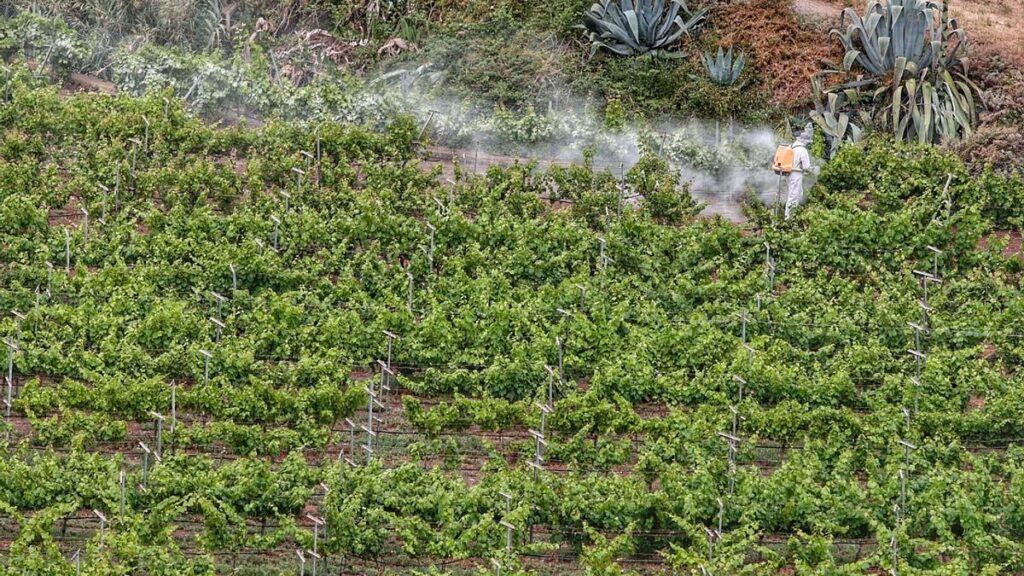
An Isolated Viticultural Treasure
The Canary Islands have established themselves as one of the most singular wine-producing territories on the planet. Their natural isolation, volcanic influence, and centuries of agricultural tradition have allowed the archipelago to preserve more than 80 grape varieties, many of them endemic and free from the phylloxera plague that devastated European vineyards in the 19th century. These characteristics have turned the Islands into an authentic “living museum” of viticulture, where varieties almost extinct elsewhere coexist with vines that have found an exceptional habitat in the volcanic soil.
Ancient Techniques and Rare Varieties
In the Canaries, tradition has been maintained through generations of winegrowers who continue to apply ancestral cultivation techniques in hard-to-reach areas, from the slopes of La Palma and Tenerife to the protected landscapes of Lanzarote. The archipelago treasures well-known varieties such as aromatic Malvasia, Listán Negro, Listán Blanco, Negramoll, Vijariego, Gual, and Baboso, alongside others almost unknown outside the islands.
A Phylloxera-Free Sanctuary
This genetic diversity has sparked interest from universities, international winemakers, and oenology experts who see the Canaries as an exceptional viticultural refuge. The reason is clear: the islands never suffered from phylloxera, which has allowed them to maintain ancient vines, some over a hundred years old, cultivated on their own roots—a luxury almost non-existent in the modern world of wine. This heritage has favoured the production of wines of enormous personality, marked by volcanic minerality, freshness, and aromatic complexity.
Diverse Landscapes, Distinct Wines
The Canary Islands currently boast 11 designations of origin, both island-specific and regional, reflecting the diversity of its geography and the adaptation of the vine to each ecosystem. From the volcanic wines of Lanzarote to the high-altitude vineyards of Tenerife, which exceed 1,500 metres in some places, the archipelago continues to bet on quality production that combines innovation and heritage.
International Recognition and Future Preservation
Canarian wineries have experienced notable momentum in the last decade, with international recognition and growing foreign demand. This is complemented by tourist interest in wine routes, which have become an additional attraction for those visiting the islands in search of gastronomic experiences. Institutions, regulatory councils, and winegrowers are now working to preserve this genetic treasure, improve its cataloguing, and ensure that native varieties continue to be a distinctive hallmark of the archipelago.
The commitment to research and viticultural training is key to ensuring the Canaries maintain their position as one of the most unique territories in the global wine scene. In a context of climate change and loss of agricultural biodiversity, the Canary Islands stand as an example of resilience and conservation, where the vine is not just an economic crop, but an essential part of the archipelago’s cultural identity.
No post found!