

Canary Islands Hotel Prices Soar Above National Average
Hotel prices in the Canary Islands have seen a dramatic increase since November 2008, rising by a relative 89% over 17 years. This is the highest percentage increase achieved by any autonomous community or city in Spain, far exceeding the general Consumer Price Index (CPI) for the islands over the same period. According to the Hotel Price Index (IPH) published this Tuesday by Spain’s National Statistics Institute (INE), the Canaries’ performance in this tourism-driven sector has been exceptionally strong, nearly double the national average rise of 48.4% and well ahead of the Balearic Islands’ 55.4% increase.
Strong Year-on-Year Growth in November
The positive trend is reinforced by the latest year-on-year data for November 2025, which shows the Canary Islands’ IPH increased by 5.8% compared to November 2024, against a Spanish average of 3.9%. This upward price movement is clearly reflected in key industry metrics. The Average Daily Rate (ADR) – the average rate paid per occupied room per day – reached 150.6 euros in November, a 3.1% annual increase (compared to a national figure of 117 euros). Similarly, the Revenue Per Available Room (RevPAR) rose by 1.4% to 132.5 euros per day, significantly higher than the national average of 77.5 euros.
Gran Canaria’s South Leads in Revenue
The tourist area generating the highest ADR and RevPAR was San Bartolomé de Tirajana in the south of Gran Canaria, with figures of 192.2 euros and 171.6 euros per day respectively. These excellent results are perfectly aligned with the robust performance of the islands’ tourism industry since mid-2022 and are greatly supported by strong hotel occupancy. In November, the second month of the current high season, the Canaries achieved the highest occupancy rate by bed places in all of Spain, at 74.3%.
Record Occupancy Rates Across the Islands
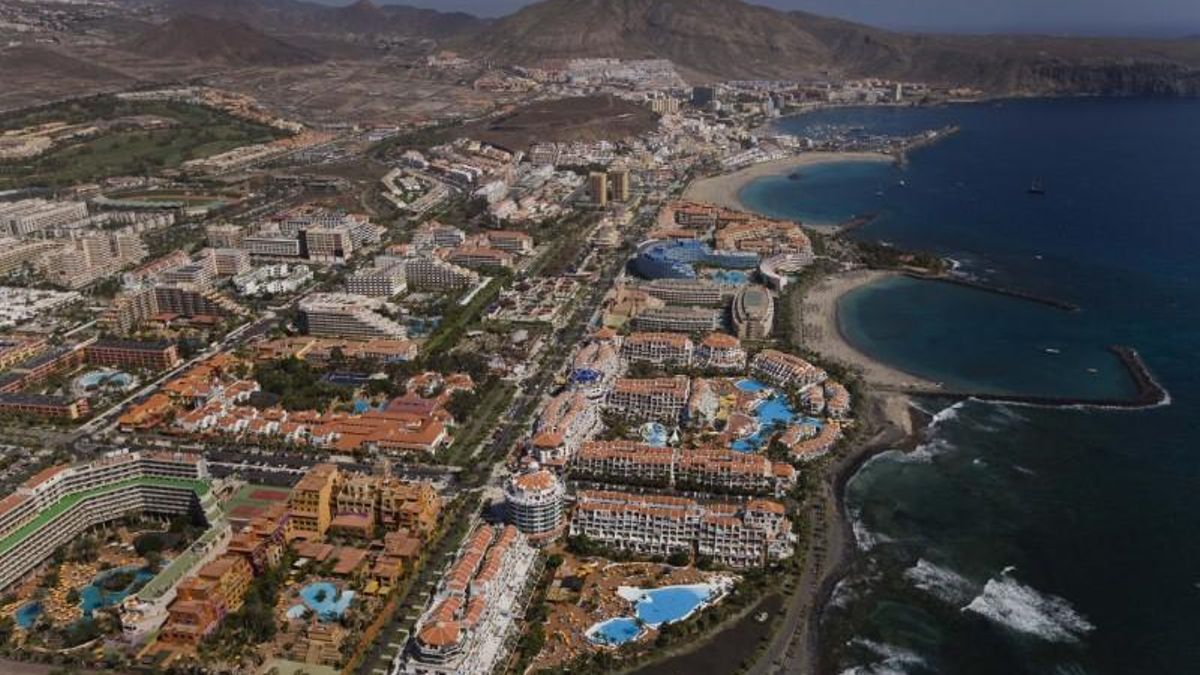
Breaking down occupancy by tourist zone, the south of Gran Canaria achieved the highest occupancy rate by bed places overall and at weekends, with 78% and 77.9% respectively. However, the individual tourist point with the best performance was Arona, in Tenerife, with 80.7% overall occupancy and 80.2% at weekends.
Tourist Origins and Key Destinations
During the first eleven months of 2025, overnight stays in Spain grew by 0.9% compared to the same period the previous year. Stays by Spanish residents fell by 0.2%, while those by non-residents increased by 1.5% nationwide. For non-resident travellers in November, the main destinations were the Canary Islands, Andalusia, and Catalonia. The Canaries alone accounted for 42.6% of all non-resident overnight stays in Spain – nearly half of the national total – followed by Andalusia (15.2%) and Catalonia (14.4%). By tourist area, the island of Tenerife recorded the highest number of overnight stays, with over 2.1 million. The top individual destinations for overnight stays were Madrid, Barcelona, and San Bartolomé de Tirajana in Gran Canaria.
British and German Tourists Dominate Arrivals
Travellers from the United Kingdom and Germany were the largest groups of non-resident visitors in November this year, accounting for 23.2% and 15.8% of their total overnight stays respectively. This pattern was mirrored in Spain’s most popular destination for arrivals: the Canary Islands autonomous community.
No post found!