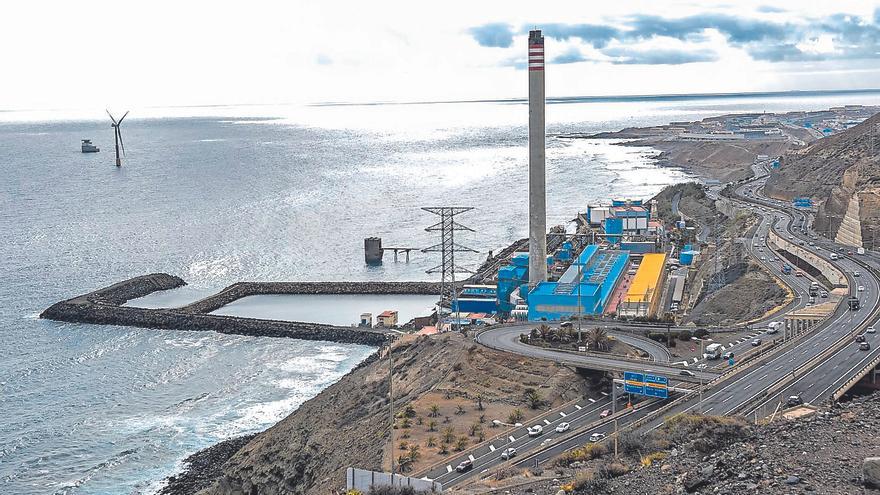
A Landmark Investment for the Canary Islands
The public tender to renew the Canary Islands’ electrical system is shaping up to be one of the most significant state investments in the archipelago’s recent history. Aimed at modernizing energy infrastructure that has been outdated for years, the Spanish Ministry for Ecological Transition and the Demographic Challenge (Miteco) issued a provisional resolution for the contest this past Friday. The project plans for the generation of 971 megawatts of new power.
Unprecedented scale and investment
The exact value of the investment remains unknown. However, for perspective, a recent emergency tender—budgeted at 350 million euros for just 242 megawatts—was launched to temporarily cover demand and prevent blackouts. Using a rough proportion, the investment needed for this main tender could be around 1.4 billion euros, though the final cost will depend on market conditions and the contracted power capacity.
The companies leading the modernization
A consortium of four companies—Disa, Satocan, Sampol, and Endesa—has been selected to lead the modernization of the electrical system with 62 new generation units. This resolution comes after years of waiting and the progressive deterioration of the existing power plants, which forced the government to activate an emergency procedure to avoid further energy crises like the one recorded in La Gomera in 2023. That urgent tender, already resolved, will allow the first units to enter service during the first half of next year.
The challenge of an isolated electrical system
The Canary Islands’ electrical system is unique: it is completely isolated, with no connection to mainland Spain, and it supplies a population comparable to that of the Basque Country—about 2.2 million people. The combination of aging infrastructure and limited generation sources has made reliable electricity coverage a structural problem.
Reports from Red Eléctrica, the system operator, have warned since 2021 that of the 97 existing thermal power units, 60 are over 25 years old, 34 are over 35 years old, and 13 have already surpassed 45 years. The oldest units currently generate 1,114 megawatts of the 2,355 available, meaning nearly half of the archipelago’s power comes from aging equipment.
Putting the investment into perspective
Due to its magnitude, this main tender represents an unprecedented multi-million euro investment in the Canaries. To put it in context, other recent major state investments in the Islands include 600 million euros announced for ports between 2025 and 2029, 1,000 million euros for Canarian airports within the Airport Regulation Document (DORA) for 2027-2031, and 1,422 million euros invested in roads since 2018. The renewal of the electrical system far surpasses these projects and highlights the strategic priority of guaranteeing a secure and modern power supply for citizens.
Market competition and regulatory hurdles
Endesa, which until now controlled the conventional generation market in the Canaries, faces the challenge of maintaining its market share without losing the additional remuneration that allows it to operate in a small, highly complex market. Law 17/2013, promoted by José Manuel Soria during his tenure as Minister of Industry, Energy, and Tourism (2011-2016), prevents companies that hold a market share greater than 40% from accessing this additional payment—a premium for the special difficulties of generating electricity in island territories.
The path forward
So far, the selected companies have preferred to remain silent, focusing on analyzing the details of the resolution. A period for collecting and assessing claims is now open before the definitive resolution is published. The system operator has also declined to comment. The Ministry of Ecological Transition and Energy of the Government of the Canary Islands is expected to issue an assessment of the Ministry’s step today. From Miteco, officials have only indicated that the provisional resolution guarantees the necessary power to cover demand and maintain supply, highlighting the increased participation of different actors in power generation.
Although the deadlines for installing the new units extend at least five years—and could even reach ten—the main tender represents a decisive step toward securing the power supply, modernizing the infrastructure, and preparing the archipelago to integrate more clean energy in the future.