Market Challenges for Canary Islands Bananas
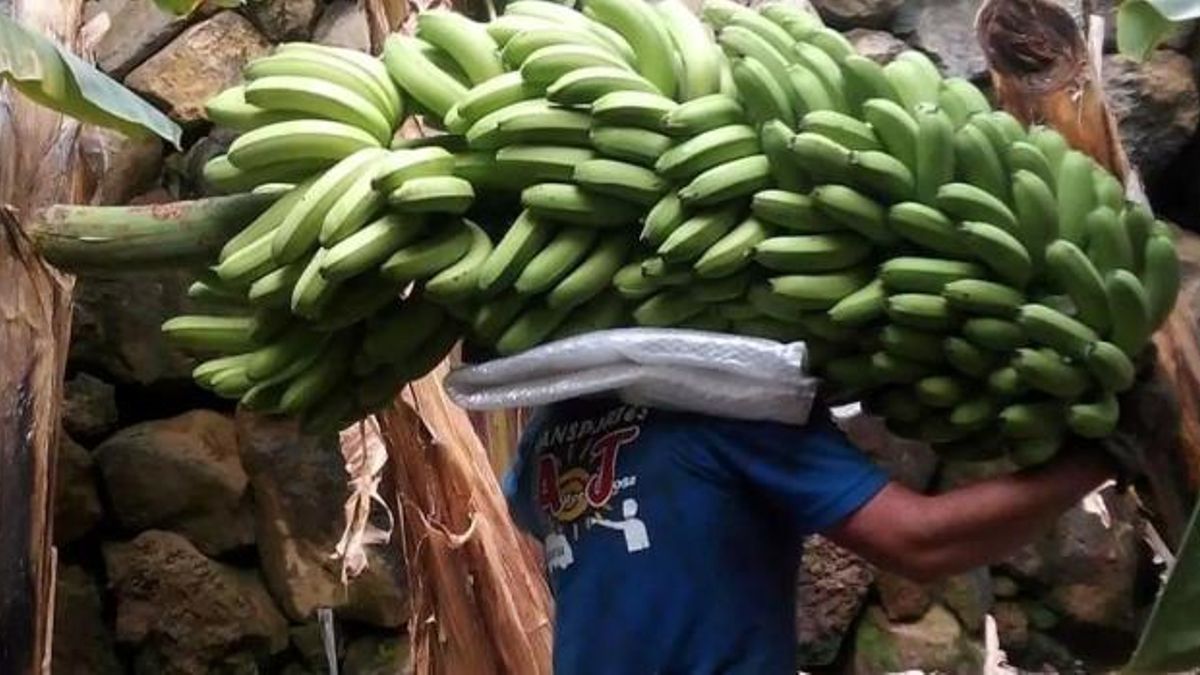
Decisions made this Friday by the Association of Organizations of Banana Producers of the Canary Islands (Asprocan) within its Market Commission do not bode well for the islands’ main export fruit. Starting next week, November 17-23 (week 47), the supply of bananas sent to their primary market—mainland Spain—will be reduced. Half a million kilograms will remain on the islands.
Reduced Exports and Falling Demand
During this upcoming week, shipment targets have been lowered from a possible eight million kilograms to 7.5 million, a reduction of half a million kilos. Banana industry sources confirmed to this digital newspaper that this cut responds to an already detected reduction in demand within this key market, which absorbs 90% of the Canary Islands’ production. According to Asprocan’s own forecasts, this declining demand is expected to intensify—a logical pattern—in the weeks leading up to and during the Christmas and Epiphany holidays.
A Perfect Storm for Prices
This negative year-end situation for banana consumption, which can be considered somewhat habitual, is compounded by an increase in fruit ready for harvest and accumulated production during the same period, plus the tough competition from regular bananas. This creates a negative combination for maintaining origin prices—the amounts paid to island farmers—at the levels seen a few weeks ago, which were around one euro per kilo or slightly more. It’s important to note this was an average for superior quality fruit, as described in the latest Weekly Price Situation reports from the Ministry of Agriculture, Fisheries and Food (MAPA).
From Recovery to Renewed Uncertainty
Those average payments to Canary growers, which had recovered from the end of last September until week 45 (a period of less than two months), were finally generating profits for farmers. This was even before adding the EU’s direct banana subsidy, paid twice yearly through the Posei program, which can amount to 0.33 euros per kilo annually for marketed fruit, with an annual financial allocation of 141.1 million euros.
Now, the market is turning sour, and the first measure adopted is to decrease the supply of Canary bananas in mainland Spain. This translates to maximum shipments of 7.5 million kilos instead of eight million.
Managing the Surplus
The leftover half-million kilos will be channeled through two traditional routes: donating part of the surplus to the Food Bank to avoid destroying the fruit at origin, and exporting to markets still in the process of opening up or for relief, such as Morocco. Supply pressure will also be eased by retaining fruit on the farms—leaving bunches that are ready for harvesting on the plant a little longer. In other words, delaying the dispatch to packaging, though this has a time limit.
Drastic Measures Considered and Rejected
Where there’s smoke, there’s fire. The market evolution in mainland Spain is viewed so pessimistically in the coming weeks that during the mentioned Market Commission meeting, drastic measures were considered. These included potentially lowering the wholesale prices for green fruit—the commercial value when delivered to the ripener—to levels of 0.5 euros per kilo. For context, in weeks 44 and 45, superior quality fruit was traded in this exchange at 1.08 euros/kilo.
This measure, proposed by one of the six producer organizations (OPPs) within Asprocan, was ultimately discarded for several reasons, including doubts about its legality, as it would constitute an agreement between operators to set the sale price of a product.
A Candid Look at the Year-End Situation
Some sources consulted about the current fruit sales situation in mainland Spain were very explicit about how the year’s end is unfolding, using a frank analogy: “The diarrhea is starting because a lot of fruit is coming and we’re entering Christmas.” In summary: too much fruit marked for shipment, at eight million kilos weekly (and likely more soon), all during a period when consumption is falling, even collapsing. These are Asprocan’s own forecasts.
Strategy for the Coming Months
Their strategy is now to cushion the price drop as much as possible so that the expected recovery by mid-January 2026 is not so heavy or difficult—making it less costly to return to the desired levels of remunerative origin prices for the Canary farmer.
The Annual Balance Sheet for 2025
Despite a very bad summer for prices received by island harvesters (practically the entire three-month season) and the negative situation already sensed for the coming weeks, the year 2025 is expected to yield a high average price paid to the farmer. This projection holds even with a commercial production level almost certainly not exceeding 420 million kilos, though it appears close to the previous annual period, which ended at 425 million—42 million less than the historical record of 2023 (467 million).
However, this high average does not mean it is representative of the reality for all Canary banana farmers. Some will have earned a lot, while others will not have fared as well.
Winners and Losers in the Banana Trade
This dynamic is explained by the year’s very uneven average price curve and the coincidence of some producers having their peak fruit output during the best market moments, which does not apply to all farmers across the islands. Those who managed to place more fruit between late January and June, plus from the end of summer until recent weeks, will have made money. Those who couldn’t will find it much more difficult and will feel the pinch in their annual accounts.