The Digital Revolution Has Arrived
The technological revolution is no longer knocking at the door of Canary Islands tourism—it has already entered, fundamentally reshaping processes, decisions, and expectations. The sector faces a new reality where artificial intelligence (AI) and digital security will determine who moves forward and who gets left behind. This presents a significant challenge for a destination that depends on travelers, but also a tremendous opportunity to reinforce its competitiveness.
Data: The New Fuel for Tourism
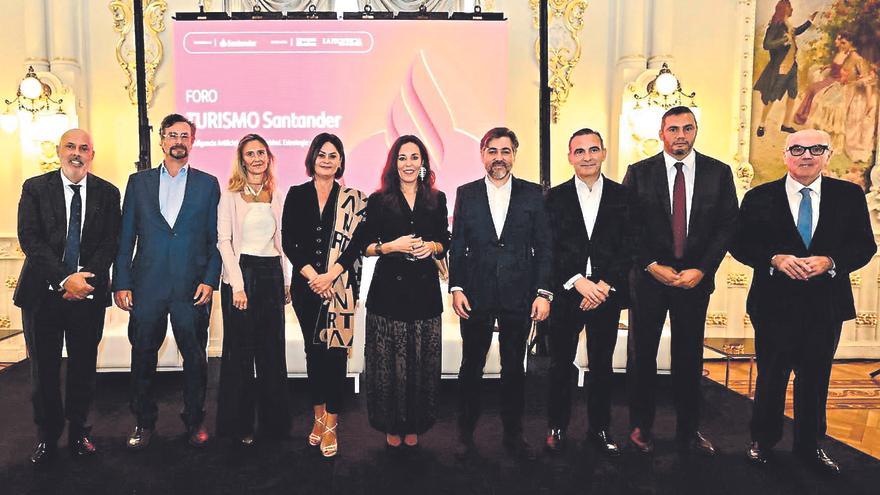
These core ideas were central to the Prensa Ibérica-Santander Forum: Artificial Intelligence and Cybersecurity. Strategy and Future, which featured Santander Spain’s CEO, Ignacio Juliá, and the Canary Islands Government’s Minister of Tourism and Employment, Jéssica de León. Experts unanimously agreed that adopting these technologies is no longer optional but “essential to avoid falling behind.” The conversation began with a clear consensus: data has become the new fuel powering tourism. Analyzing this data allows the industry to anticipate trends, understand travelers better, and tailor services to increasingly sophisticated expectations.
From identifying consumption patterns to the automated analysis of thousands of reviews, AI provides an immediate window into deep customer understanding. “Information is what allows us to be better and offer unique experiences,” emphasized the President of Inetel, Juan Ramírez Said, highlighting how this intelligent use of data has become a strategic lever for a destination as competitive as the Canary Islands.
Automation and the Human Touch
This capacity to process information on a massive scale works alongside another area where AI is already transforming tourism: process automation. Dynamic pricing systems, tools that detect food waste in buffets, and virtual assistants capable of answering queries in multiple languages at any hour—the potential is enormous for an industry that never sleeps. Yet, amidst these advances came an essential reminder: technology cannot displace the human part of the experience.
“A machine can be efficient, but it cannot provide the warmth of a person,” stated the General Director of Cordial Hotels & Resorts, Nicolás Villalobos, focusing on the need to find a real balance between automated service and personal interaction. Experts insisted that while many digital-savvy travelers are comfortable interacting with a bot, others still need a human voice when a complex question or unexpected problem arises. The challenge will be to offer options without imposing a single channel that could lead to frustration.
The Critical Need for Cybersecurity
The other side of this deeply digital transformation comes with significant risks. As hotels, agencies, suppliers, platforms, and administrations become increasingly interconnected, the exposure surface for cyberattacks multiplies. The impact can be critical. The failure of a single provider can block reservations, access, payments, or essential services. This prompted a stark warning from specialists, who summarized the vulnerability with a clear image: the destination is only as strong as its weakest link.
In the Canary Islands, that link can be strained if certain imbalances are not corrected. Companies in the Archipelago invest less in technology and innovation than the national average, placing them in a more fragile position against a cybercrime industry that is becoming more professional and growing relentlessly. “An attack doesn’t just affect one company, but the entire tourism value chain,” recalled the CEO of Velorcios, Pedro Andueza, stressing the urgent need to raise the digital maturity of the Islands’ entire productive sector.
A Matter of Governance and Training
This evolution cannot rest solely on IT departments. The new European NIS2 directive makes it clear that cybersecurity must be managed from the boardroom, with direct responsibilities for CEOs and senior management. This is not just a technical issue, but one of governance. It involves professionalizing decisions, continuously evaluating risks, and establishing robust protection protocols.
At this point, Andueza also highlighted the importance of staff involvement. Employee training is the first barrier—and often the most effective—against an attack. “Installing alarms is useless if we leave the windows open,” the executive expressed, alluding to the need for every employee to know how to identify warning signs and handle internal information correctly.
A Vision for the Future of Canarian Tourism
With all these elements—data, automation, cybersecurity, talent, and human sensitivity—the forum painted a clear scenario: AI is a cross-cutting opportunity that can boost productivity, reinforce sustainability, and consolidate the Canary Islands in the elite of tourist destinations. It is a useful tool for both large chains and local SMEs, provided it is adopted with strategy, investment, and training.
As was evident in the shared reflections, the future of tourism in the Canary Islands will not be defined solely by the quality of its beaches, hotels, or infrastructure, but also by its capacity to analyze and protect its data, the robustness of its security systems, and the balance between technology and humanity in every interaction with the visitor.
The Government’s Perspective
The Minister of Tourism, Jéssica de León, also analyzed the situation. She used her speech to reiterate that the sector’s success requires confronting new challenges with ambition and responsibility. She argued that the Canary Islands is in a period of tourism strength—with higher spending per visitor, increasing connectivity, and a more competitive destination—but warned that society “demands top marks” and that to achieve them, it is essential to update a regulatory framework that has gone decades without renewal in some areas.
She also stressed the importance of placing the resident at the center of decisions, moving forward with the regulation of new types of accommodation, promoting training, and strengthening the connection between companies and talent. De León highlighted ongoing work in infrastructure, sustainability, decarbonization, and destination management, as well as the development of digital tools like the experience marketplace.
De León insisted that the tourism industry is an economic and social engine for the Islands and that her duty as a public official is to “defend the sector and support it in all the challenges it faces ahead.”