
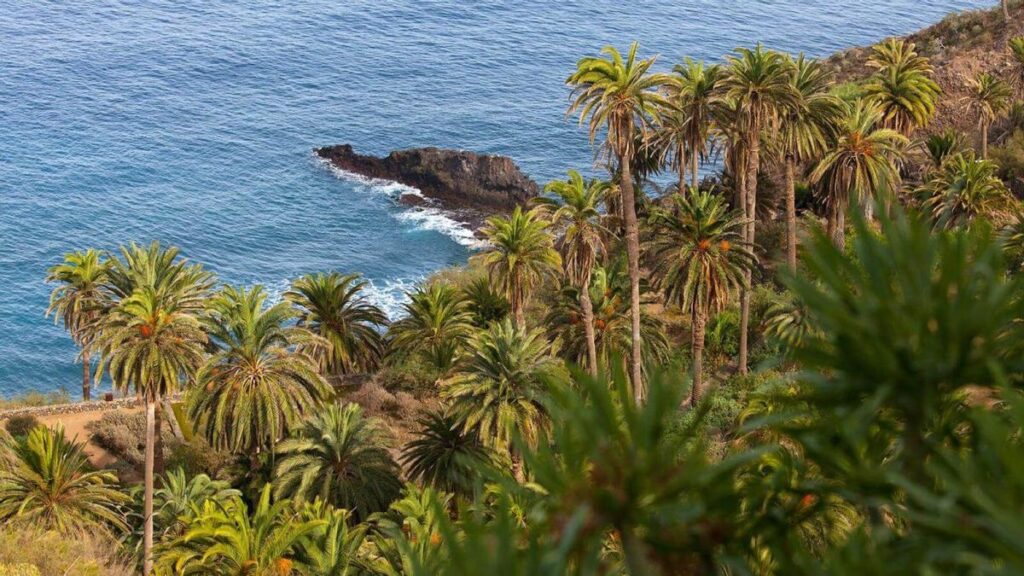
A Coastal Paradise Nearly Lost
The Rambla de Castro, one of the most emblematic natural spaces in the north of Tenerife, came perilously close to irreversible transformation in the early 1970s. A mega-tourism project named ‘Tropicana Playa’ proposed the construction of hotels, apartments, and bungalows across this coastal enclave of immense historical and environmental value. On 15 November 1972, two property development companies approached Los Realejos Town Council after purchasing a 104,201-square-metre estate, along with the associated planning rights under the so-called Rambla de Castro Partial Plan—a project now considered one of the most controversial episodes in the area’s history.
The Ambitious Tropicana Playa Blueprint
The urban plan divided the land into three major sectors. The most striking was a 47,000-square-metre green zone featuring a hotel suspended over the cliffs, complete with swimming pools, two tennis courts, internal pathways, and the historic Rambla manor house, surrounded by palm groves and a natural ravine. A second sector of 25,000 square metres was earmarked for tourist apartments on a slope near the sea, with tiered buildings designed as a grand viewpoint over the Atlantic Ocean. The third was reserved for bungalows, to be built on agricultural terraces previously used for banana cultivation.
Global Crisis Halts Development
This project, and other similar tourism ventures, were paralysed by the 1973 global oil crisis. Triggered by the Yom Kippur War, it sparked one of the greatest economic and energy crises of the 20th century and brought a sudden halt to many property investments in the Canary Islands. However, the threat did not vanish. In the mid-1980s, the landowners revived the idea of developing the Rambla de Castro, initially proposing a 600-bed hotel and later open blocks of apartments, which generated growing public alarm in north Tenerife.
A Site of Deep Historical Significance
The Rambla de Castro is notable not only for its natural value but also for its historical richness. The enclave was granted in 1501 to the Portuguese settler Hernando de Castro, where some of Tenerife’s first vines were planted. For centuries, it was admired by European travellers, scientists, and artists such as Sabino Berthelot and Jules Leclercq. It enjoyed its golden age under the Betancourt and Molina family during the 18th and 19th centuries but entered its most critical period with the 20th-century urban plans, which even considered relocating the Loro Parque zoo to this coastal space.
A Long Road to Protection and Recovery
Finally, in late 1992, an urban planning agreement was signed between Los Realejos Town Council and the landowners. The deal allowed for the transfer of approximately 80,000 square metres to the municipality, including the manor house, the Fortín de San Fernando, and water springs, in exchange for reserving planning permission for a hotel that was never built. A few years prior, in 1987, the Rambla de Castro had been declared a protected natural space, beginning a long recovery process marked by a lack of investment, episodes of vandalism, and institutional neglect.
A Symbol of Survival
The Rambla de Castro is considered an environmental jewel of the Canary Islands, having survived destructive urban projects, decades of neglect, and tourism pressure. Recent institutional interest in restoring the manor house as a visitor centre rekindles hope of finally closing one of the longest and most contentious chapters in its history. It is a landscape that almost vanished and now stands as a symbol of natural heritage resistance against uncontrolled urban development in Tenerife.
No post found!