
La Palma’s Dramatic Landscape Captures Global Spotlight
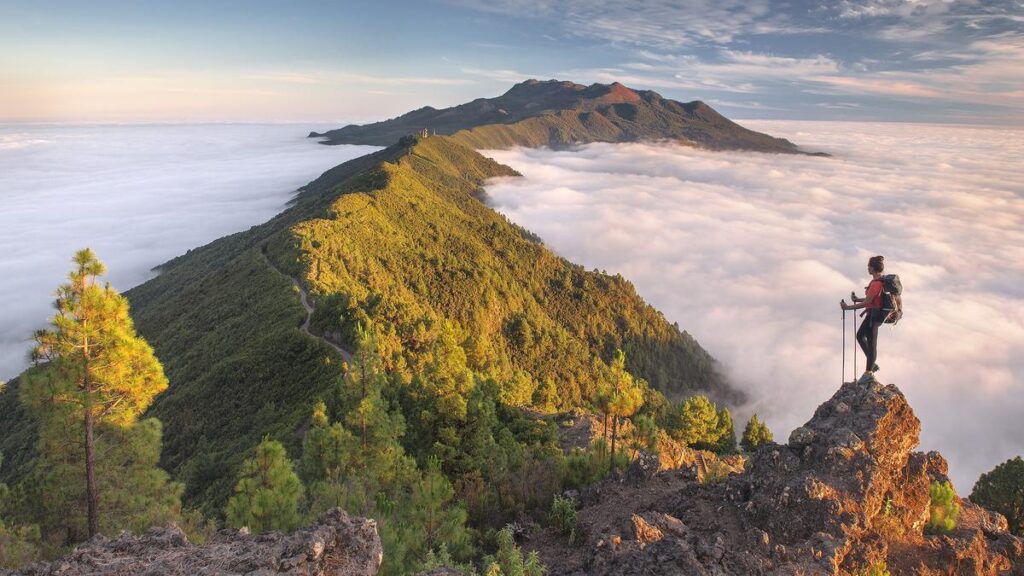
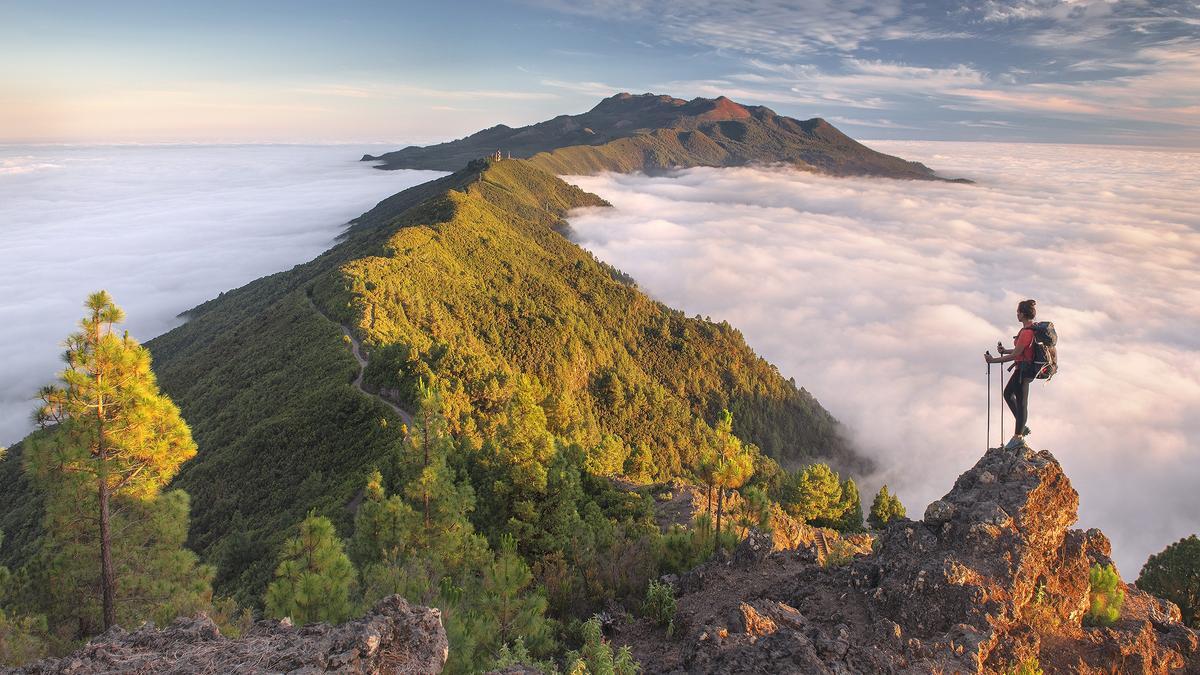
The near-impossible profiles of the mountain trails on La Palma are proudly displayed in the 2026 calendar of the renowned National Geographic Travel magazine. Behind that stunning snapshot is the talent of a Canary Islander: Saúl Santos. This photographer, a native of Fuencaliente, has secured the cover of one of the world’s most prestigious publications and leads a collection of images from creators across several countries that will illustrate the twelve months of the coming year.
A Photographer’s Connection to His Homeland
This is not the first time Santos has caught the attention of major international media with his spectacular photographs. He had previously been published by the magazine. His unique vision of the landscapes of Patagonia—a place of special significance for him—and two other images of La Palma, including one of the Tajogaite eruption, had also previously drawn the attention of National Geographic editors and graced their covers. Santos thus marks a new milestone in his career, though this time in a different way. On this occasion, thanks to his talent, the characteristic sea of clouds and the peaks of La Isla Bonita will mark the start of the new year for readers worldwide.
The Story Behind the Perfect Shot
“That photo was taken just after the coronavirus pandemic, when we were given our freedom back and the lockdown ended,” he recounts. Santos isn’t certain if that time confined served to allow nature to show its best face, but through his eyes, the landscape was in its “maximum splendour.” Perhaps the prolonged absence of humans was the key factor in making the peaks of his native island shine in that way. But one thing was clear to him: it was an opportunity he had to seize. During those months he was able to take many photos. In fact, to this day he continues to find “very beautiful” work from that era in his archive.
As he explored that untouched nature, an idea was forming in his head. He had the perfect image in mind, but knew the conditions to obtain it were very difficult to find. “Nature doesn’t always give you the conditions you want. In fact, 90% of the time you have to adapt, and that can sometimes be frustrating,” he reveals. Finding the sea of clouds as low as he wanted is uncommon. “And for it to cover both sides of the peaks is even rarer,” he adds. Typically, the postcard image captured of this area of La Palma is of the famous cloud waterfall. But that day he realised it was different.
A Spectacular Discovery and a Touch of Superstition
In that moment, the photographer was still below the blanket of cloud. “I didn’t want to get my hopes up too much, but I climbed to the point from which I wanted to take the photo and found a spectacular landscape.” Santos still remembers the feeling that flooded his body upon seeing the view. “I told my partner—who accompanied me the whole way—that I wasn’t going to celebrate out loud so as not to jinx it,” he adds. He feared, in a way, that his expectations might not match the reality captured by his eyes. However, luck was on his side. “Everything came together. The light, the conditions, the moment, and even the sky was photogenic,” he explains.
It was then that he asked his wife, Sladjana Apostolovski, to step into the frame. For Santos, she is his greatest support. “Since I met her, I have grown personally and professionally,” he notes. Apostolovski accompanies him on almost all his travels, advises him, and most importantly for him, is always there in difficult times. Human references are a technique often used by photographers. “There are times when this technique doesn’t fit with the location, but in this case I decided to use it to give a sense of scale to the landscape.” Furthermore, it served to show the public that it was an easily accessible environment. The decision was the right one. “National Geographic, and specifically the Travel magazine, values photographs that show attractive and accessible destinations. And so it was.” Santos didn’t know it yet, but his island and his wife had, in that precise instant, become the protagonists of 2026.
Pride in Documenting Island History
For Santos, it is a great source of pride that La Palma is again on the cover of a magazine of this calibre. It happened for the first time in 2021, with another shot of the Los Tilos cloud waterfall, which became his most special cover. It also bore his signature. “Seeing the land that raised me and has given me everything appear in National Geographic was incredible.” That same year he also witnessed another historic event on La Isla Bonita that earned him his fourth cover: the eruption of the Tajogaite volcano.
Until then, the most impressive landscapes he had seen were in Patagonia, Argentina. “They were incredible landscapes. Glaciers, Iguazú Falls, and the most spectacular and wild mountains in the world,” he recalls. Amazed by the discovered landscapes, he decided to publish one of the shots in a photography forum with a comment: “I think I’ve seen the most beautiful natural elements on Earth.” But someone warned him that he still needed to witness a volcano. “All Canary Islanders have these natural phenomena in mind, especially those from La Palma because we have the most recent volcanoes,” he details.
Santos does not conceive of nature as being good or bad. “We simply had the bad luck that it affected a fairly populated area and caused a lot of damage.” Despite this, and like any other curious photographer, he saw in Tajogaite an opportunity. “For me it was something indescribable and I experienced a mix of unthinkable emotions.” On one hand, Santos had been able to see an amazing natural spectacle with his own eyes. Even photograph it. But on the other, the feelings caused by the disaster were inevitable. Still, his work meant that a piece of Canarian history could travel through numerous prestigious magazines to any corner of the world.
From Canarian Roots to International Recognition
The man from La Palma has always worn his origins as a badge of honour. “My passion for nature comes from a very young age, when my father instilled in me that love for landscapes,” he says. His father was a photographer and was responsible for taking the pictures for the tourist guides of La Palma. “I accompanied him and I think that desire to share my experiences through images comes from there.” He decided to study photography and did his work experience precisely at the newspaper EL DÍA-La Opinión de Tenerife.
He began working as a photojournalist for several media outlets and in 2007 decided to make the leap to another continent. It was then that he travelled to Argentina, a place that marked a before and after in his life. There, on the other side of the world, he managed to capture the most striking photographs until the La Palma volcano. “National Geographic contacted me. I had already sent them work, but hadn’t managed to get their attention,” he says. But that time was different. “It became my first cover with them and that’s why Patagonia has a special place for me.” In fact, two of his five international covers come from this place.
“For me, that was the pinnacle of what I could aspire to and it was what allowed me to acquire the recognition I have today,” he notes. There he not only got that gigantic boost to his career, but also discovered what would be the direction of his professional life. “I realised that photography and travel were my two great passions and I decided to focus my career on that,” he narrates. He began doing work in exchange for flights and accommodation and took the opportunity to photograph other remote places of the world and other South American countries.
A Simple Philosophy and a Lasting Legacy
To this day, Santos continues to enjoy his work, which is also his passion. His process is simple, but cautious. He always tries to be as faithful as possible to nature. “I believe my work has been recognised for sincerely conveying what my eyes see,” he adds. In fact, to date the photographer has managed to publish his images in about 70 media outlets worldwide and has achieved 40 covers for other magazines, newspapers, and books—both national and international.
He usually looks for the most attractive point of each area. “When I go on a trip, the first thing I do is a reconnaissance of the place. I analyse each space and, based on my tastes or the commissioned work, I begin to assess the conditions,” he narrates. He studies the light and climate of each landscape and chooses the most suitable time of day, which is usually sunrise or sunset. For him, having again captured the attention of National Geographic is an achievement, yes. But not the last one. “My goal is for my photographs to continue reaching people.” Although he cannot deny being proud of what he has achieved. He has become a true international reference for Canarian photography and has managed to make the beauty of La Isla Bonita dazzle nature lovers across the planet. And now, the rugged profiles of the Canary Mountains will accompany the pages of the calendar for 2026.
No post found!