
Tejeda Becomes a Christmas Brand
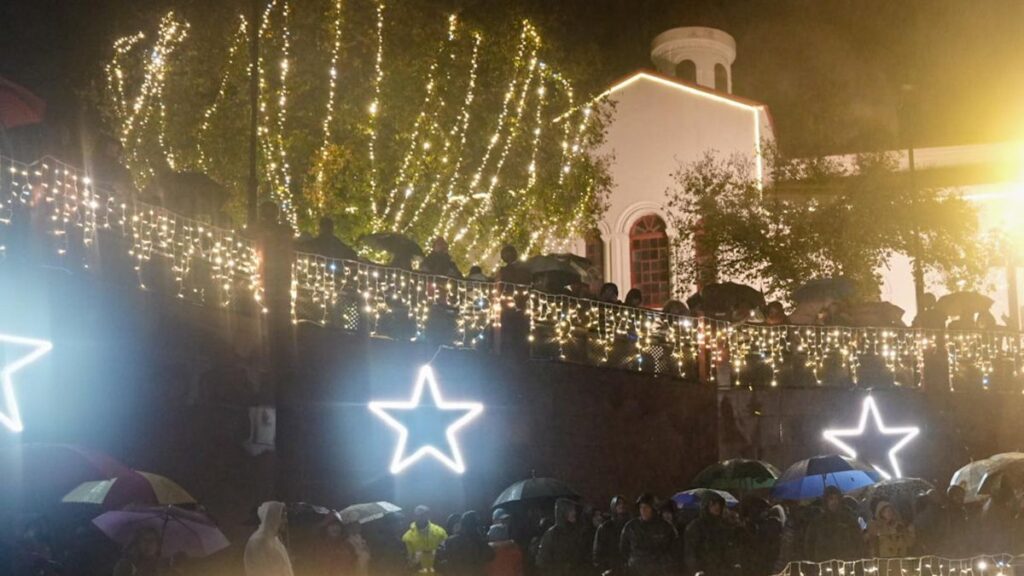
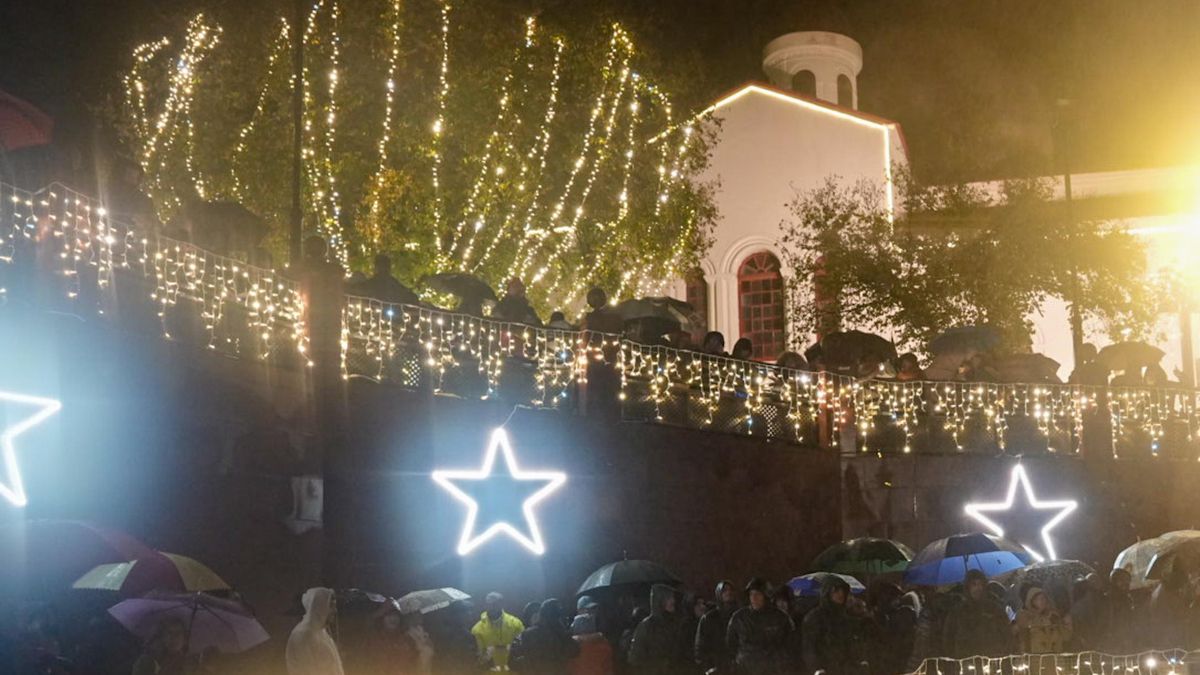
Tejeda has become a Christmas advertising icon. It was already famous in Gran Canaria for its occasional snowfalls, almond sweets, and the spectacle of its blossoming fruit trees. Now, it is shining in one of the most impactful and recognised Christmas campaigns in Spain. The people of Tejeda—and indeed all of Gran Canaria—have invested so much hope that the recent rainfall and cloud records are historic. It has been 32 years since such precipitation and snow data were recorded, back during the general strike against the Labour Reform. This has produced a double joy, despite a week having passed and the summit’s light display still not being clearly visible due to the weather.
The Prestigious Festive Campaign
The Christmas advertising season is very special: Coca-Cola, the National Lottery, the “Vuelve a Casa” adverts, and perfumes fill the schedules. Among them all, Ferrero Rocher stands out. The Italian brand supplies the Spanish market mainly from Germany and Piedmont, within its international network of factories for this accessible luxury product, especially associated with gifts, festivities, and status. A product consumed in over 170 countries, made from hazelnuts and chocolate in different textures, wrapped in golden foil.
I have not been able to ascertain the exact impact or budget (except for the estimated ROI of the celebration in Mojácar in 2022, which amounted to €700,000—a figure Tejeda has now far exceeded). Nor have I found studies on this company’s promotions and its Christmas campaign, despite it being one of the most well-known and long-running. Furthermore, it was once linked to one of the most media-friendly figures of the so-called jet-set, who would quietly withdraw from the campaigns: the ex-wife of Julio Iglesias, connected to Carlos Falcó (the Marquis of Griñón) and Miguel Boyer, and who also maintained a relationship with Nobel laureate Mario Vargas Llosa.
A Strategic Shift in Branding
From those campaigns of the 90s, which remind us of her ageless face alongside an image of distinction and luxury, the brand has made a huge transition from aspirational to community branding. This involved a major social media mobilisation action through voting for towns chosen from Spain’s 17 autonomous communities. A battle for votes culminated with Tejeda as the winning village of ‘Juntos Brillamos Más’ 2025, taking over from the Galician town of Ribadavia in 2024.
We are possibly looking at the largest advertising campaign ever for a village in the archipelago. An initiative that changes the image and perception of Tejeda, associating it with a transnational confectionery brand. A reality that will last for decades, probably longer, with the longevity that Isabel Preysler’s image also enjoyed, and which in the coming years will gradually fade like the rain that has fallen these days in the summit village.
Tangible Benefits for the Village
The impacts are varied, and their survival will depend on how this new title is managed for one of Spain’s Most Beautiful Villages. In tourism, a notable increase in visitors and the promotion of Tejeda as a Christmas destination is anticipated. Economically, there is already an indirect benefit for local businesses, added to the value of the significant lighting installation, which will make visits after the iconic sunset with Mount Teide on the horizon more attractive. There is also a social benefit, boosting community pride and cohesion. And let’s not forget the reputational impact, as the product’s alliance with Tejeda improves the local image at a regional and national level.
Furthermore, we are witnessing the first steps of a profound creative change for Ferrero Rocher. A transformation of its campaigns achieved not through visible ruptures, but through a deep reorientation of its narrative. This type of change is less studied but more interesting from a strategic viewpoint. Especially considering that the brand had successfully achieved advertising longevity without wear and tear, ultimately opting to replace individual symbolic capital with collective symbolic capital.
Tejeda, Capital of the Old Island
To conclude, allow me to remind you that Tejeda and its basin is the place where our island was born in a process spanning millions of years during the Miocene epoch—a time when the Alps, Pyrenees, and Himalayas arose, while in America the Andes and Rocky Mountains formed. Important mountain ranges were also created in the Iberian Peninsula, like the Baetic and Iberian Cordilleras, due to tectonic plate collisions.
In Gran Canaria’s origins, lava emerged flow after flow without stopping until it collapsed, creating the great depression caldera and the planet’s most spectacular cone sheet, describing the “petrified storm” as Unamuno called it, declared a Site of Geological Interest (LIG). In that colossal landscape, a dwindling yet deeply rooted population persists: rocky, like part of the volcanic cliffs that enclose the village. If we cut the island into four pieces, the southwest and much of its borders would show a tranquil and depopulated island, where only 2% of the island’s population inhabits the surface area. A territory that hosts the majority and most extensive protected spaces on the island, in addition to being a UNESCO Biosphere Reserve and World Heritage Site.
To all this, the declaration of the Guguy National Park should be added (which it is not, because Spanish bureaucracy is frustrating). Be that as it may, Tejeda, the entire old island or Paleo-Canaria (Neo-Canaria covers the North and East), is the exaltation of the island’s nature, the most rugged and eroded zone. Where its leaders make enormous efforts to settle a population that continues to emigrate, bleeding the territory dry. And it is not for lack of activity, but due to isolation. There is work and opportunity, there is healthcare and education. Even today, one can have the most advanced connectivity in human history, bringing the people of the summit closer to any point on the planet through telecommunications platforms.
A Hope for Renewal
But perhaps we have grown accustomed to noise pollution, air pollution, and the pollution of our own minds. And we have forgotten that “Happiness is only real when it is shared” and can be found in silence, in the recognisable faces of a few neighbours, in seeing the dragon trees bloom and predicting it will be a rainy year because these wonders of Macaronesian vegetation bloom on rare and spaced occasions. But this year, numerous dragon trees have flowered on several islands, after many years of drought.
For Tejeda, the rain has caused as much joy as the Christmas advert. All that remains is for the work on the reservoirs to be completed so they can fill up and reverse the model that has persisted for centuries, which has extracted both water and population from the highlands. Let us hope this rain is a premonition of a change that allows the recovery of the old island, that the hope materialises, and that Gran Canaria—with Tejeda on high—makes us all shine brighter together.
No post found!