
Starmus Festival Announces Return to the Canary Islands
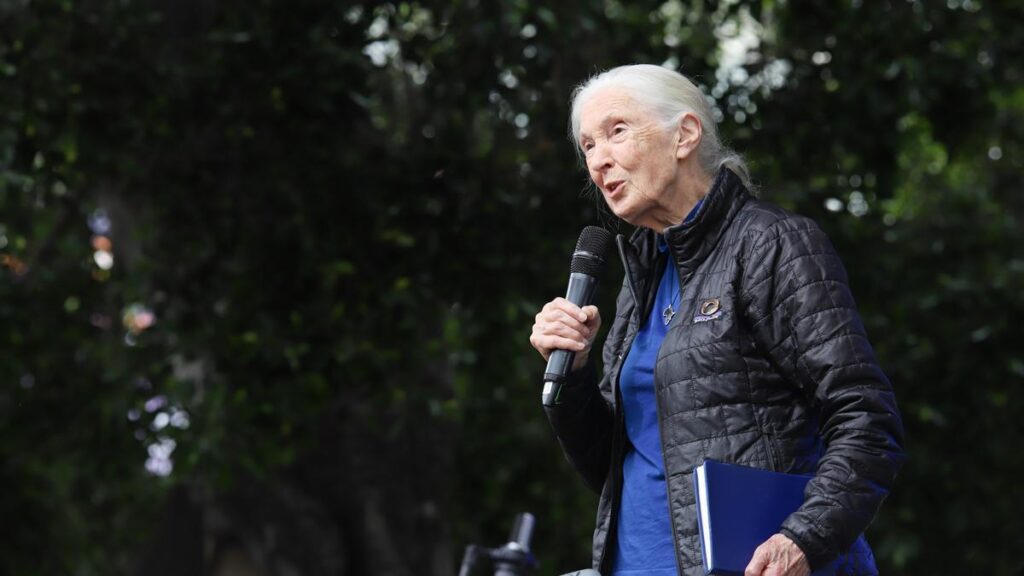
The prestigious Starmus science and music festival is set to return to the island of Tenerife in October 2026, a decade after its last appearance there. Following the success of the special edition held in 2025, the event will also be repeated in La Palma. Among the new features for 2026 will be the creation of a new prize honouring the festival’s godmother, the renowned primatologist Jane Goodall, who passed away in October this year at the age of 91 after a lifetime dedicated to science.
Dates and Major Financial Backing
Institutional sources have confirmed the festival will run from 17 to 22 October next year. To make it happen, Canarian institutions are investing a total of €4.5 million. Specifically, the Canary Islands Government has budgeted €1.5 million, the Tenerife Island Council (Cabildo) €2.5 million, and the La Palma Island Council approximately €500,000. This combined contribution is €1.5 million more than was allocated to stage the event on ‘La Isla Bonita’ (La Palma) in 2025, when the festival had funding of €3.3 million (€3 million from the Spanish state and €300,000 from the La Palma Cabildo).
Confirmed Stars of Science and Music
The transfer of funds will be managed, as in the last edition, through the Starlight Foundation, which will co-organise the event alongside the Starmus team. The list of confirmed attendees is already stellar, featuring Starmus co-founder, Queen guitarist and astrophysicist Sir Brian May; the UK’s Astronomer Royal, Lord Martin Rees; and Sir Roger Penrose, Nobel Prize winner in Physics 2020 for his discoveries about black holes. They will be joined by businessman and philanthropist Sir Michael Hintze; microbiologist Emmanuelle Charpentier, Nobel Prize winner in Chemistry 2020 for developing genetic ‘scissors’; and iPod founder Tony Fadell. Adding a musical note, Italian tenor Andrea Bocelli has also confirmed his presence.
Positioning the Canaries as a Scientific Hub
“We want to turn the Canary Islands into a benchmark. Starmus helps us enormously to connect knowledge and bring science closer to people through outreach,” stated Migdalia Machín, Councillor for Universities, Science and Culture of the Canary Islands Government. She values how this event, with over a decade of history, not only gathers the brightest minds in science in one place but also “positions the Canary Islands and strengthens us.”
A Call for Annual Scientific Communication
This commitment follows a direct appeal from the festival’s founder, Garik Israelian, during the edition held in La Palma in April. He urged the Canary Islands Government to organise a major annual scientific communication festival in the Islands. “You cannot have scientific infrastructure like that in the Canaries and not communicate the science you do to the world,” insisted Israelian at the festival’s opening press conference, advocating for “holding some events every year.” He argued that public engagement in scientific development relies on fundamental science communication, and that many events like Starmus are needed to attract interest in major projects like the Thirty Metre Telescope (TMT).
In an interview with EL DÍA, Israelian revealed that one of his dreams would be to hold a festival with activities across all the Canary Islands. “The festival would be centred on one island and have activities to do on the others. The distances are so short that it’s a possibility you can’t find in many other places in the world,” he concluded. (This story will be updated.)
No post found!