
Tragedy Sparks Urgent Safety Review
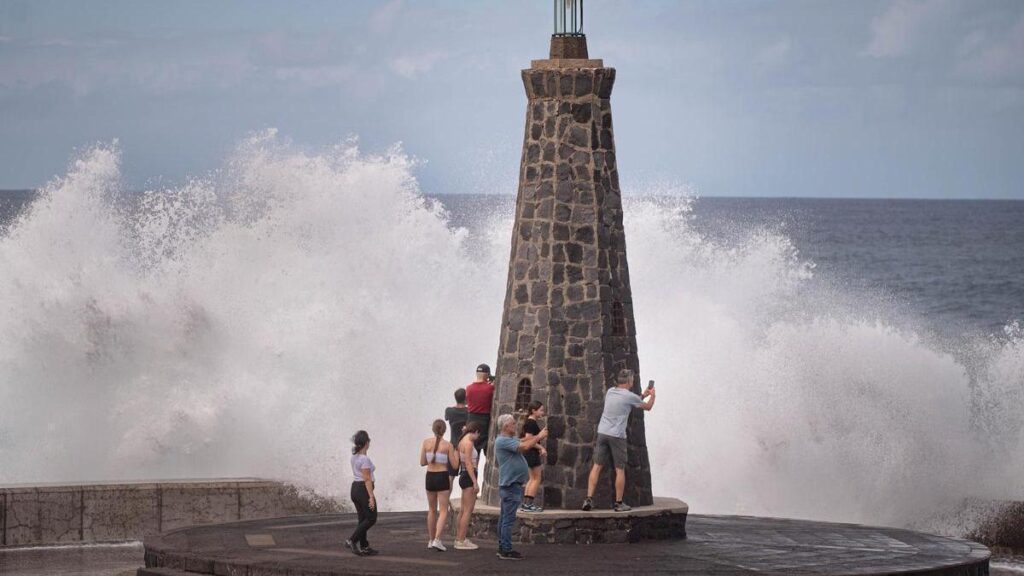
A freak wave killed four people on Sunday at the Los Gigantes natural pools in the Tenerife municipality of Santiago del Teide. This was not an isolated incident. In early November, on the pier in Puerto de la Cruz, the sea swept away several cruise ship passengers who were merely trying to take a selfie. They were on holiday, unaware of the Atlantic’s force when it batters the coast. That brief, devastating moment would have claimed more victims had a waiter from a nearby establishment not managed to rescue three of them; a Dutch woman, however, drowned.
Bridging the Critical Information Gap
This and other incidents during the recent storms in the Islands have underscored a pressing need. The regional ministry led by Manuel Miranda had already begun work to include specific information protocols for the tourist population in the future Civil Protection law. The plan involves delivering multilingual information to visitors who do not speak Spanish during emergencies. The ministry confirms that warnings about storms are always sent to hotels and cruise ship captains, but they admit there is no guarantee these alerts reach the tourists themselves. This broken chain between the institutional warning and the end visitor is precisely what the future law aims to fix.
“The Canary Islands are a safe destination, but to keep it that way we must improve how we relay information,” acknowledges the Deputy Minister for Emergencies, Marcos Lorenzo. His department manages an Archipelago with 2.5 million residents that receives over 18 million tourists a year, many of whom are oblivious to the islands’ natural risks. The reality is stark: Canarian coasts continue to record dozens of deaths each year, particularly among people unfamiliar with the sea’s power or basic self-protection rules.
Emergency Calls Highlight Communication Challenge
The figures speak for themselves. In the first months of this year, the Coordinating Centre for Emergencies and Security (Cecoes) 112 handled a total of 17,891 calls in languages other than Spanish, an 8.36% increase from 2024. English is the dominant language (67%), followed by German (14.59%), Italian (11.41%), and French (6.24%). The remainder is spread across Russian, Arabic, Polish, or Romanian.
According to Lorenzo, over 40% of emergencies involving tourists are related to security, nearly 31% to health issues, 12.48% to accidents, and almost 10% are requests for information. This variety shows that visitors do not always know who to turn to or how to act, especially when a language barrier exists. To address this, Cecoes already has operators who can provide in-person assistance in five languages, plus an external platform capable of offering simultaneous translation in over 40 languages, allowing them to respond to virtually any foreign call without delay.
Prevention, Not Just Reaction
But, as the deputy minister insists, “The problem is not in handling the emergency, but in managing to prevent it.” Safety does not depend solely on warning flags, lifeguards, or alerts; it requires that those visiting the islands receive information in their own language, clearly and without causing alarm. This is where the future legislation must come into play, to turn preventive information into an added value of the destination. Weather alerts, safety recommendations, and risk warnings must reach tourists directly through official channels, hotels, cruise lines, and tour operators, leaving nothing to chance.
“Establishing a culture of civil protection must also include those who visit us,” Lorenzo summarises. The government is already working on a contact agenda with the tourism sector, business associations, lifeguards, and hotel and cruise operators to ensure information reaches tourists without distortion. Without this intermediate step, tragedies like the one in Puerto de la Cruz could be repeated.
A Sobering Annual Toll
In 2024, 72 people died on the coasts of the Canary Islands. In 2025, the number has already exceeded 60 fatalities at this point in the year. This is a statistic that deeply worries the regional government. The principle guiding their work is that no one should risk their life for not knowing that the sea in the Canaries can sometimes roar dangerously, or that the beauty of the landscapes hides a topography that can be lethal. “We do not want to spread fear, but security,” concludes the emergencies chief.
No post found!