A Night of Circus and Stars
The 2026 Michelin Guide Gala served as the traditional annual gathering where Spain’s so-called haute cuisine comes together to celebrate the joy of being part of this circus—a word that made more sense than ever in the overwhelming and impressive setting of the SOHRLIN Performing Arts and Entertainment Space, owned by Antonio Banderas. I must start by emphasizing that the best part of the night was the majesty of the stage, its indescribable 3D screen, and the circus acts that alleviated the tedious and leaden presentation by a professional like Jesús Vázquez, who undoubtedly did not have his best night. Completely disoriented and trying to be the center of attention with misplaced comments, he sent the event’s presentation into a freefall with continuous mistakes and an ending unworthy of the importance of the event and what should be expected from a hired professional.
The Gala’s Pacing and the Green Star Clarified
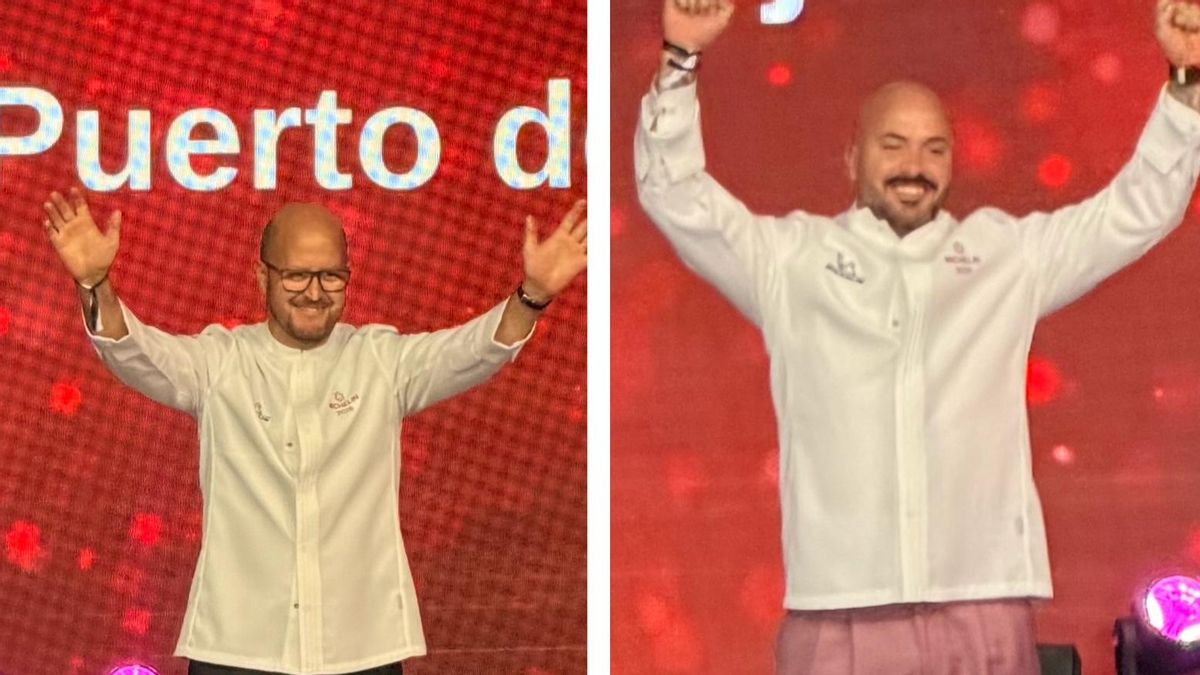
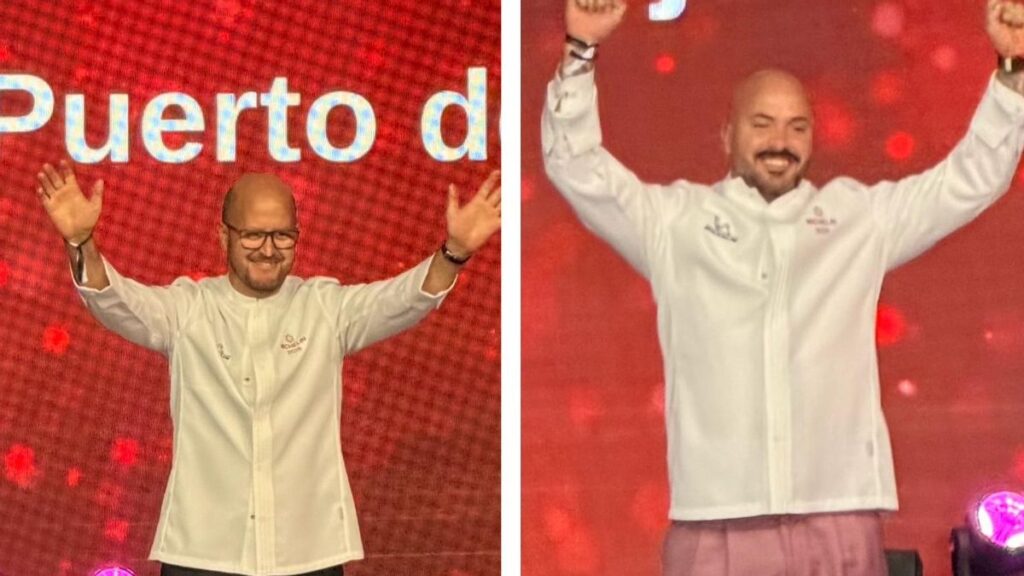
Regarding the gala itself, it’s fair to say it was excessively long. I fail to understand why the direction isn’t adjusted to ensure everything is wrapped up in under 90 minutes, or 120 minutes at the very most. This is something the organization should look into, aiming to cut down the amalgamation of political and sponsor speeches that often generate more animosity than support for the brands or institutions. As for the awards, I’ll begin with the Canary Islands. We can say it’s a time for congratulations because we didn’t lose a single star—that’s the first achievement—and I include our “Madrileñan star,” Gofio, in that. We also saw the recovery of the Michelin Star for the restaurant Haydée, which it had lost after moving to the Gran Tacande hotel, and the wonderful surprise of the more-than-deserved Michelin Star awarded to Seve Díaz for his restaurant in the northern Tenerife town of Puerto de la Cruz.
National Highlights and a Chef’s Humble Tribute
On a national level, I would highlight that the controversy surrounding the Green Star was settled by the explanation given during the gala itself, emphasizing that it is not an environmental certification but rather an impetus for dialogue among restaurants—a symbol that unites a dynamic and innovative community of committed professionals. Alongside these, awards were given for Best Dining Room, Sommelier, Young Chef, and Mentor Chef, the latter of which went to Quique Dacosta. Concerning the two-star restaurants, the big winner was Barcelona, with four new establishments in this category, and one more for Madrid. Big names like Albert Adriá received one of the biggest ovations of the night, though he noticeably showed immense frustration at having taken so long to receive this award, displaying little emotion—quite the opposite, I’d say. On the other hand, it’s important to recognize the work of Paulo Airaudo, who now possesses eight Michelin Stars across the world. Here, he leads the kitchen masterfully through Jerez-born chef Rafa de Bedoya. Paulo, who generates as much passion as criticism in the sector, paid an elegant tribute to his head chef by declining to put on the chef’s jacket and giving all the spotlight to the person who truly handles the day-to-day at Aleia. That’s where the human quality of a great chef is demonstrated, and Paulo is one—I can attest to that.
Reflections and Controversies in the Guide’s Judgements
Regarding restaurants with three Michelin Stars, it was neither fish nor fowl, despite the circulating predictions and bets that had brought some establishments to Málaga with their entire teams, only for them to leave with a bittersweet taste. It strikes me powerfully that the guide does this with the two-star category but doesn’t dare to do something I’ve seen in the documentary series “Al Filo; en búsqueda de la Estrella Michelin,” where restaurants are invited to the ceremony and given no recognition whatsoever. And after the pertinent and necessary dose of information, here begin my reflections. I don’t understand or agree that establishments like Ricard Camarena, El Culler de Pau, Coque, or Deesa are not in the guide’s highest category. We could also include Amelia here, but as they are in the midst of relocating to the María Cristina hotel, they have that added time margin. In the same vein, I find it inconceivable that StreetXO doesn’t have its more-than-deserved award, or that El Invernadero, Bagá, and La Salita still have only one star. Some things completely escape my reasoning, especially since this year I dined at a one-Michelin-star restaurant in Valladolid, with a laboratory-like surname, where I had an experience closer to “Nightmare in the Kitchen” than to a restaurant featured in the red guide. This is something the inspectors need to look into; winning a star shouldn’t be a lifetime appointment, and there are many voices in the sector already calling for the inspectors to get serious, because otherwise, they risk losing the prestige earned over these 125 years.
The Canary Islands at a Crossroads
As for the Canary Islands, overall I have the feeling that we are in a period of stabilization, or to use a cycling term, a valley stage. It worries me that, focusing on the island of Gran Canaria, if we exclude the new chapter that Bevir has begun at the Lopesan Costa Meloneras hotel, I don’t see any proposals that aspire to enter the Michelin Guide in the short term, and deep down, I can even understand it. The average diner is increasingly distanced from fine-dining style restaurants. In terms of concept, I believe the diner is looking for more popular places with more accessible average checks than the grand gastronomic experiences and the prices managed by these establishments. Hence, with the exceptions of Tabaiba in Gran Canaria and now El Taller de Seve in Tenerife, all the Michelin-starred restaurants in the Canary Islands are located within hotels or accommodation complexes, such as Villas Kamezí or the Aquamarina aparthotel in the case of La Aquarela.
Bridging the Gap with the Local Community
This situation is creating what I see as a more fundamental problem: the absence of affection that the local public feels towards the chefs and establishments that are positioning our territory as a top-tier gastronomic destination, even though they are indirectly doing a lot to raise the average standard of restaurants outside this elite circle. I don’t know what the solution is, I don’t know what the path forward is, but it’s clear that if we use Abraham Ortega as an example, I’m almost certain that Verode receives in one week the same number of diners that Tabaiba gets in a month. Michelin-starred restaurants must understand that sustainability and success are dictated by the absolute profitability of their venue. As I write these lines, the restaurant Ochando in Seville comes to mind; they just won a Michelin Star, and the guide’s own description highlights that they “defend a contemporary cuisine attached to seasonal products, with the possibility of half-portions for most dishes and two tasting menus.” If we add to this the growing current of dissatisfaction with tasting menus as the only offering from high-end restaurants, this is a point that could serve as food for thought for the islands’ starred restaurants to win back the local public, who, generously speaking, do not account for more than 20% of their clientele in most cases, and thus “not put all their eggs in the tourist basket.” We must not forget the lesson of COVID, when it was the residents who filled the islands’ bars, restaurants, and hotels.
Chef Perspectives: Roots Versus Transformation
And that’s another issue: hotel prices make Canary Island residents think twice before crossing their doors, even just for dinner. Abraham Ortega’s great tenacity in keeping Tabaiba in the place where it was born—which has just been renovated, a change we are yet to see—alongside the statements Seve Díaz gave us right after leaving the stage, reaffirming that “hotels can call me all they want, but El Taller de Seve is not moving from where it is. It’s not the prettiest place in the world, but it’s my home, and if they gave me the star cooking here, I see no reason to change. In my case, my restaurant was full before today; I serve about 700 meals a year just at dinner service and have a waiting list for the next two months. I’m sure the Michelin Star will bring me new adventures and customers who don’t know me, but I won’t change. I am indebted to those who come to eat at my home more than 40 times a year, who are already part of my family, and if I am here, I owe it to them.” Seve added, “The Taller is mine, I owe nothing to any supplier—they get paid religiously every month—and we live a two-minute walk away. The quality of life for my wife, the other half of my life and my project, and for myself, is not for sale.” Meanwhile, Victor Suárez was experiencing calmer moments, granted by the experience of having received the star for the first time two years ago for the former Haydée. “In my case, the move to the Gran Tacande hotel has changed our lives for the better. Allow me to thank Alirio (the hotel’s director, who accompanied him at the gala) for all the commitment and confidence he has placed in us. This is only the first step; starting tomorrow, we will already be working to achieve the second star in the near future.”
A Call for Collaborative Action
I believe we are at a moment where I see a need, more than ever, for a roundtable between public institutions, the most awarded restaurants, the more popular gastronomy sector, and, why not say it clearly, specialized media like us who visit all types of establishments. I don’t know what kind of actions, promotions, commitments, or linkages should be created, but I believe if there is a time to do it in Gran Canaria, it is now. Since 2019, when the restaurants Los Guayres and La Aquarela won a Michelin Star in Seville, up until this edition—interestingly, also in Andalusia—the island has always left the annual gala with some award under its arm. Today is the moment to replace those “recognitions” that the Island Council gives year after year with a “meeting to advance,” where we can talk, think, propose, and, in short, work to not lose what has been achieved so far and which was so hard to reach.
If you’d like, you can follow us on Instagram, X, and TikTok under the handle @javiers_gastro.