A New Era for Canary Islands Electricity
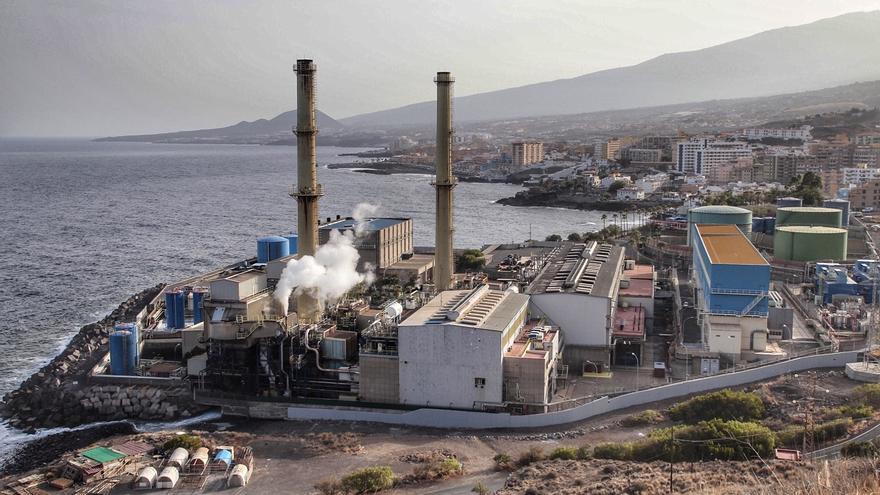
A long-awaited decision has finally been made regarding the renewal of the Canary Islands’ obsolete thermal electricity generation park. The uncertainty surrounding the participation of Endesa, the sole operator in this segment of power production until now, has been resolved. While Endesa will remain a player, its monopoly is officially over. The Canarian companies Disa and Canary Carreteras (Satocan), along with the Balearic company Sampol, are set to form a quartet of companies tasked with consigning blackouts to the past. This is according to a resolution accessed by this publication.
An Express Process to Avert Crisis
This resolution comes after years of delays and the continued deterioration of the existing power generation fleet, which forced the launch of an express tender to contain the risk of further blackouts. This urgent procedure, now decided, will allow the first new generation units to enter service during the first half of next year. As anticipated, the Ministry for the Ecological Transition and the Demographic Challenge (Miteco) has concluded the first phase of the ordinary tender before the end of this year and will communicate this to the participating companies and the Government of the Canary Islands. A period for submitting and evaluating claims now opens before a final resolution is issued.
Massive Investment and Long-Overdue Upgrades
The express tender, which will mobilize 350 million euros to deploy approximately 242.7 megawatts (MW) across three islands, provides a scale for what is to come. Although the final cost of the ordinary procedure is still unknown, the scale of the power capacity to be renewed suggests the final cost will almost certainly run into the billions. The generation fleet is already thirteen years past its intended replacement date. Many machines are operating on extended lifespans, with several requiring delicate care. Despite this, blackouts due to failures in thermal generation have not always been avoided.
Boosting Efficiency and Green Energy
Furthermore, the current machinery is less efficient than modern alternatives available on the market, meaning it is more polluting. This inefficiency also makes it harder for the system operator (Red Eléctrica) to integrate more renewable power into the energy mix. The question of Endesa’s participation was clouded by Law 17/2013, which prohibits companies holding a market share exceeding 40% from accessing additional remuneration—a premium paid for the special difficulties of generating electricity in island territories.
Incentives and Project Evaluation
A total of 181 applications were submitted to the tender. Newly installed generation units will be entitled to the additional remuneration scheme for a period of 20 years. For existing units that require a significant investment to modernize, this period is reduced to between five and ten years, depending on the scale of the investment. Finally, units currently in perfect working order will enjoy an additional five years of this scheme. The resolution notes that the economic cost, based on the state of the machinery—from fully operational to brand new—was a key factor in the evaluation, alongside other technical observations like the size of the installations, operational time limitations, and urban planning restrictions faced by the projects.
A Long Road to a Stable Grid
Despite the progress, the generation units resulting from this ordinary tender are not expected to enter operation before 2030 at the earliest, given the magnitude of the process. After accessing the decision, Miteco sources simply stated that in all electrical subsystems, “the necessary power to cover the stated needs and guarantee supply has been selected.” These same sources expressed satisfaction with the “notable increase in the participation of different agents in the field of generation,” assuming the final resolution does not differ significantly from the provisional one. They also confirmed that, as intended, the main outcome of the decision is “the renewal of the existing thermal fleet.”
Government Backs the Tender Process
This development follows the recent announcement by Endesa that the Government of the Canaries rejected its request to replace thirteen highly unstable generation units in La Palma, Fuerteventura, and Lanzarote. The General Director of Energy, Alberto Hernández, referred to this tender as the appropriate moment to address such changes. With the doubts surrounding Endesa’s role in the renewal process, the Regional Ministry for Ecological Transition and Energy chose not to hinder the procedure already underway.