Casa de Carta Museum Reopens Its Doors
Tenerife has welcomed back one of its historic museums, the Casa de Carta, a key site of the Museum of History and Anthropology of Tenerife (MHAT). Located in the Valle de Guerra area of La Laguna, the property has reopened following the completion of the first phase of renovations undertaken by the Tenerife Island Council. The revitalized museum now invites visitors to explore an updated space where past and present seamlessly intertwine.
A Fresh Look at History
The renovation is built on two main pillars: a refreshed visual identity and a visitor route that connects historical legacy with contemporary perspectives. You can now enjoy the botanical garden, a collection of traditional crops, a Canarian greenhouse, a water weighing station, a wine press, and a room dedicated to mills. Beyond the restored estate itself, the public can also experience the “Tramas de Memoria” (Threads of Memory) exhibition and a temporary photography display by Vicente Pérez Millán, which vividly portrays life in Valle de Guerra during the 20th century. The Casa de Carta is now open in this new phase from Monday to Sunday, from 10:00 to 17:00.
Threads of Memory: Weaving Past and Present
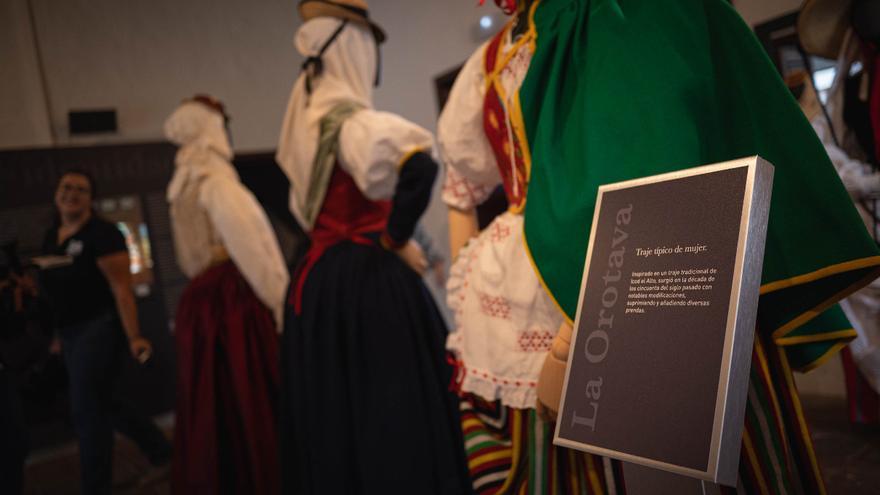
The “Tramas de Memoria” exhibition is the centerpiece of this new era, intertwining textile and photographic heritage into a narrative that reflects on traditional crafts through a contemporary lens. The Monteverde family’s costume acts as the starting point for exploring the processes, materials, and cultural meanings that define the island’s identity. Furthermore, visitors can enjoy a temporary exhibit dedicated to needlework such as ‘roseta’ lace, ‘calado’ embroidery, and bobbin lace, paying homage to the women who passed these skills down through generations, turning their gestures into living memory.
Architectural Harmony and Historical Respect
One of the most notable interventions in this first phase is the new perimeter wall, inspired by traditional agricultural windbreak walls. It creates a visual dialogue with the rural surroundings of the hacienda, which is situated on the main Tejina-Tacoronte road. Inside, the renewal of the exhibition spaces focuses on the wing of the building constructed in the 18th century, dating back to when the estate belonged to the Lope de Guerra family. This intervention respects the original architecture, enhances its historical value, and adapts it to new museographic narratives.
More Than a Museum: A Community Heartbeat
Carlos Pallés, the Scientific Director of the Autonomous Organization of Museums and Centers of the Tenerife Island Council, emphasized that this property is much more than a museum; it is an “identity symbol” for Valle de Guerra that “builds community” and has become a “point of reference” for the region. This hacienda has had up to 23 owners throughout its history and, after 200 years, came into the hands of the Tenerife Island Council. However, its museographic narrative had not been updated—a necessary mission to now incorporate the history of the women, children, and elderly of the area.
Secrets Within the Walls
Among the secrets to discover at the Casa de Carta after its reopening, the Monteverde family costume holds a prominent place in the exhibition. The journey leads visitors through rooms like the living room, which showcases the intimate life of the families who resided there, and the kitchen, which for a time also served as a public bakery. Additionally, the renovation has recovered a corridor in the house that offers a perfect view of the coastal landscape of La Laguna.
A Commitment to Culture and the Future
The President of the Tenerife Island Council, Rosa Dávila, stated that the reopening of the Casa de Carta represents a “fundamental milestone” for the island’s culture and heritage. She noted that this intervention “symbolizes the firm commitment we have undertaken to modernize our museums, strengthen their bond with citizens, and place them in a contemporary, accessible, and living space.” Regarding this broader project, she indicated that it demonstrates “we are capable of caring for our history without stopping our gaze towards the future.” Dávila insisted on the need for an island network of museums that is “more modern, more open, and more connected with society,” announcing that the Council will work to ensure that “culture is an engine of development, cohesion, and identity.”
A Living Heart for the Community
The Councilor for Culture and Museums, José Carlos Acha, highlighted the importance of this space, which “has been like a second home for the neighbors of the area.” It has not only served as a venue for various exhibitions but has also been a meeting point for the community, hosting numerous activities over the years. “The heart of the Casa de Carta remains alive after this intervention,” expressed the councilor, who also noted that “the work carried out now allows us to combine traditions with a contemporary perspective.” He concluded, “I hope we will soon have all phases completed to be able to showcase the socioeconomic richness we have on the Island.”
Preserving Collective Memory
For his part, the Deputy Mayor of La Laguna, Fran Hernández, emphasized that “this cultural enclave is essential for preserving our identity, keeping alive the traditions that define us, and strengthening the bond with a past we must not forget.” He underlined that “protecting these spaces is also protecting the collective memory of the municipality.”