A Major Investment in Cultural Heritage
The Cabildo of Gran Canaria has invested nearly one million euros in significant improvements to the Risco Caído caves, enhancing both the site itself and its accessibility. These extensive works were carried out under the supervision of archaeology specialists and led to the discovery of a large number of ceramic fragments and the remains of an ancient wall.
Enhancing the Visitor Experience
The project focused on creating a uniform aesthetic for the front of the caves at this archaeological site, located in the island’s highlands and declared a UNESCO World Heritage site. Key improvements include the development of 6.2 kilometers of walking trails and the restoration of traditional agricultural terraces and ancient water channels, which help to reclaim the traditional rural landscape. These are complemented by a new parking area and a viewpoint, offering visitors better facilities and stunning vistas.
Protecting a Precious Site
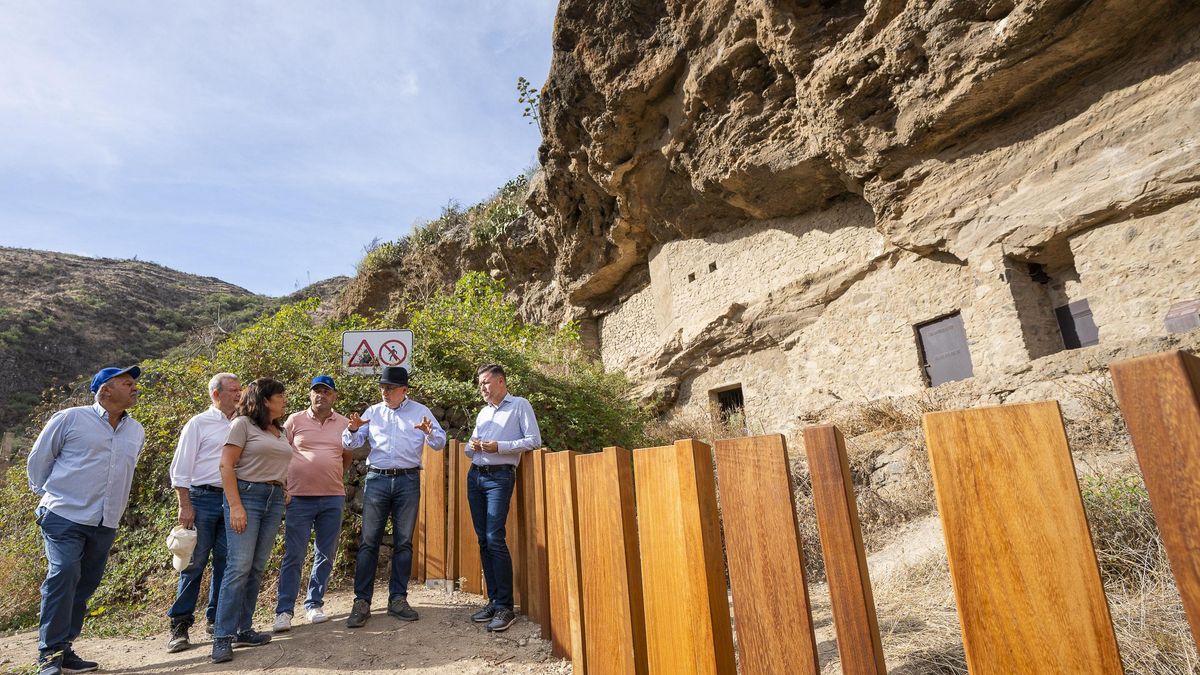
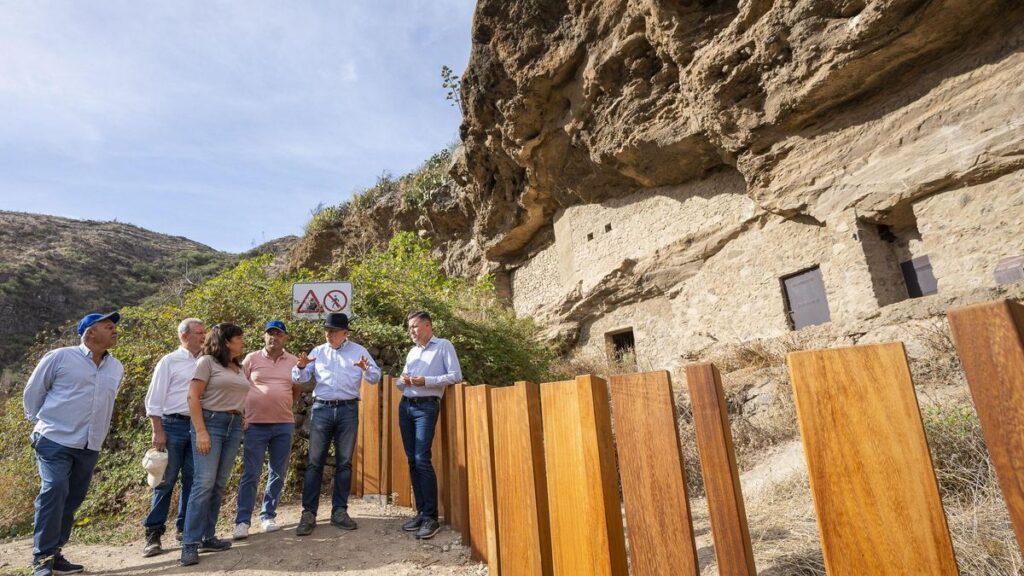
To elevate the protection of the site and mitigate risks from potential rockfalls from the cliff face, wooden marker posts have been installed at a short distance from the exterior of the caves. The cliff itself undergoes periodic stabilization work. All interventions respected the original materials of the complex and corrected past modifications that had compromised its visual and physical integrity. The methodology prioritized minimal, reversible intervention that is respectful of the site’s archaeological authenticity, involving cleaning and consolidation to promote both chromatic and functional integration with the surroundings.
Unexpected Archaeological Discoveries
Supervised by archaeology experts throughout to prevent any damage to the heritage asset, the project also yielded a series of unexpected finds. The Cabildo explained that these “chance discoveries provide an opportunity to continue deepening our knowledge of the Cultural Landscape.” A significant number of the ceramic fragments correspond to traditional earthenware from the nearby center of Lugarejos. Furthermore, on the terrace to the left of the site, a series of stones were found that may be the remains of an ancient wall.
A Future-Focused Vision
During a site visit, the island’s president, Antonio Morales, highlighted that initiatives currently underway or about to begin in the Cultural Landscape are valued at 30 million euros. These projects are dedicated to the site’s adaptation, protection, and promotion. He also emphasized the importance of an ongoing agreement with the University of La Laguna, which provides new equipment that will advance research and conservation of pictorial manifestations using infrared and laser analysis and registration techniques. A second phase of an agreement with the University of Las Palmas de Gran Canaria is also planned to deepen the understanding of the highlands’ origin and settlement.